Step-Through E-Bike Pros and Cons: What the Low Frame Actually Changes
Short Answer: A Low Frame Fixes One Thing—The Leg Swing
When riders shop for a comfortable electric bike, "step-through frame" is often treated as a magic phrase that guarantees an easy-to-handle bike. In reality, a low step-through frame solves one specific mechanical action: getting your leg across the center of the bike when you mount and dismount.
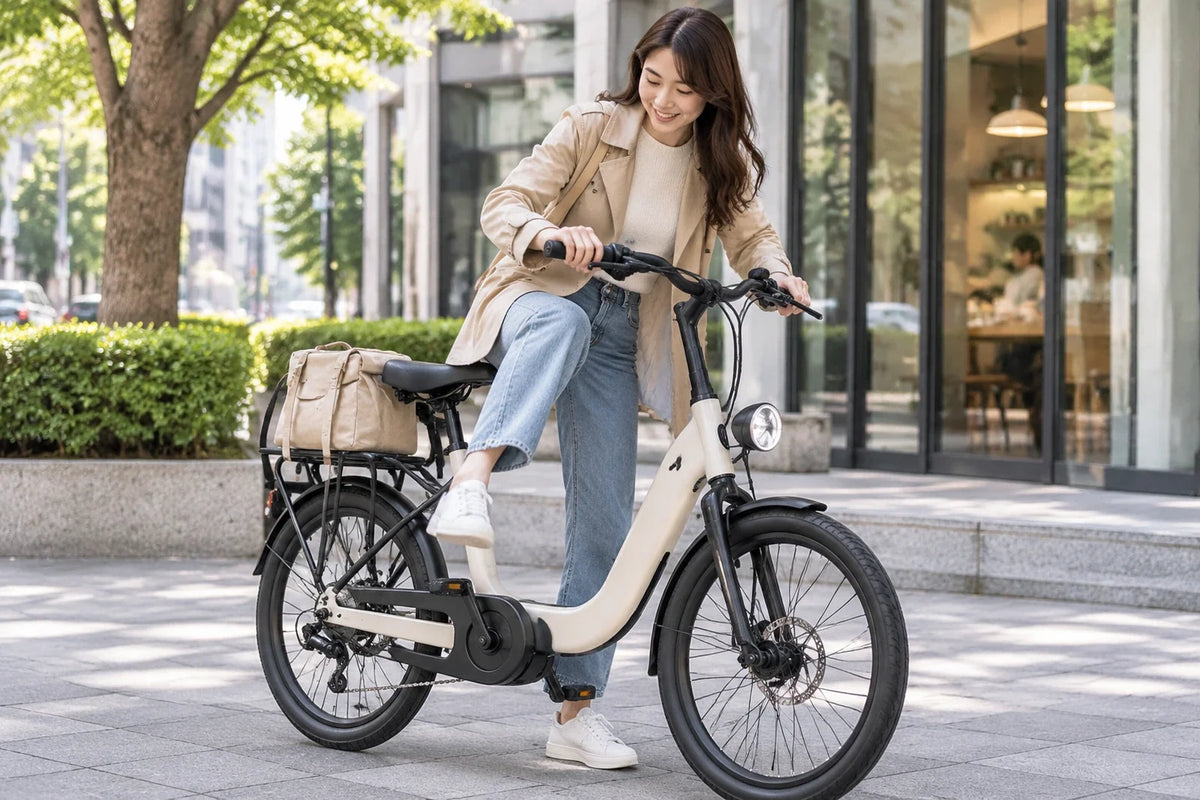
By dropping or removing the high horizontal top tube, a step-through frame lets you pass your foot forward through the open center instead of swinging your leg up and over the rear wheel or saddle. That single change makes a clear everyday difference in three situations:
- Mounting and dismounting at a curb or stoplight: You can step onto the pedals and step off onto the pavement without tilting the bike steeply toward yourself.
- Loading and riding with a rear rack bag or basket: When you have groceries, a backpack, or a crate strapped to the rear rack, a high top tube forces you to kick your leg even higher to clear the cargo. A step-through frame leaves the center walkway open.
- Riding in everyday clothing: Whether you are wearing a long coat, stiff work jeans, or a skirt, you do not have to hike your clothing over a crossbar just to get seated.
While our site's sizing guide covers body measurements like inseam and handlebar reach, this article focuses strictly on the frame boundary itself: what a low frame actually changes, what it leaves untouched, and how to test both before you buy.
What a Step-Through Frame Actually Changes
To understand why a low frame feels different during everyday stops and starts, look at the three moments before the wheels reach cruising speed:
1. No High Top Tube to Clear
On a traditional high-step diamond frame, mounting requires standing on one foot, leaning the bike, and swinging your other leg in a wide arc over the saddle. On a step-through frame, the main tube slopes low toward the bottom bracket. You squeeze the brake levers, lift your foot through the open space in front of the seat post, and place it on the far pedal.
2. A Simpler Standing Start and Stop
Urban riding involves frequent pauses at crosswalks, driveways, and intersections. When you come to a full stop, a dropped frame gives you open clearance in front of the saddle so you can step forward off the seat and plant both feet flat on the ground without feeling trapped over a high bar.
3. Often Paired With an Upright Riding Posture
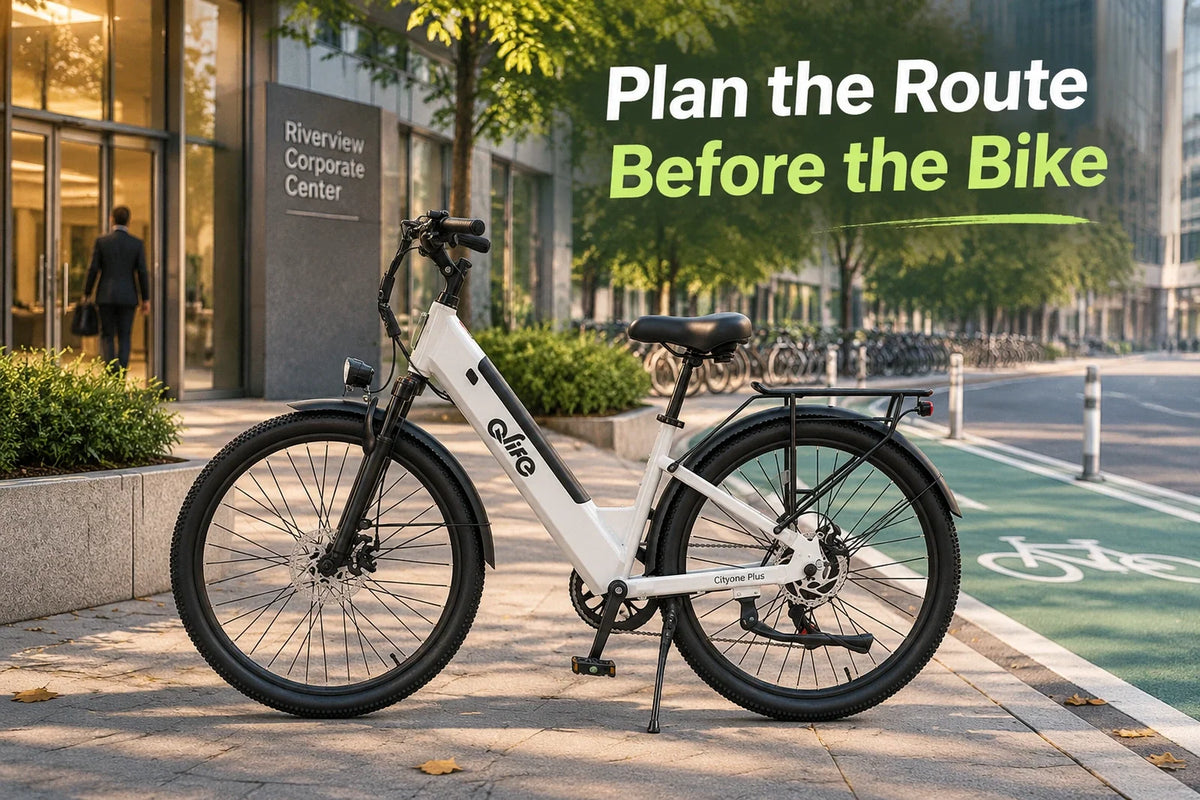
Designers typically pair a low step-through frame with swept-back handlebars and a relaxed seating angle so the entry posture matches the riding posture. For example, in our QLife product knowledge base (_assets\qlife-product-knowledge-base\cityone-plus-step-thru-electric-commuter-bike.md), the Cityone Plus Step-Thru Electric Commuter Bike pairs its low-step frame and wide sweep handlebars with an upright seating position close to 90 degrees, carrying a 350 lbs max payload capacity at a 70.55 lbs e-bike weight (standover height is pending in our product library and is not stated here).
Notice the pattern: every advantage of a step-through frame happens while you are stepping on, stepping off, or standing over the bike at a stop. Once your feet are on the pedals, other variables take over.

What It Does Not Change
Many first-time buyers assume a low frame makes the entire bike lighter or easier to balance. Choosing a step-through frame does not change four critical parts of owning an e-bike:
- It does not reduce the bike's weight: An e-bike with a low frame still carries a motor, battery pack, and reinforced tubing. Whether a bike has a high top tube or a low step-through opening, lifting a 70+ pound machine up porch steps or onto a vehicle rack requires the exact same effort. Before assuming a step-through model is easy to transport, read our guide on how heavy e-bikes affect lifting and racks.
- It does not balance the bike at low speeds or stops: A two-wheel step-through e-bike still runs on two wheels. When you slow down or stop at an intersection, you still have to hold the bike upright. If the frame leans while you dismount, you still support its weight by hand.
- It does not automatically fix saddle height, handlebar reach, or brake lever reach: A low opening only helps your foot pass through the frame. Once seated, you still need the seat post adjusted to your leg length, the handlebars close enough that your arms are not overstretched, and the brake levers positioned where your fingers can squeeze them easily.
- It is a mechanical feature, not a medical solution: A low step-through opening makes stepping onto a bicycle simpler for riders who prefer not to lift a leg high, but frame shape is never medical advice or a substitute for consulting a professional.

What to Check During a Test Ride
When riders compare step-through and step-over frames, they sometimes wonder how a low frame feels when rolling with a loaded rear rack. Instead of relying on broad claims about frame stiffness, turn frame feel and cockpit ergonomics into three hands-on questions during your test ride:
- Does the bike feel steady when rolling off from a stop with your normal cargo? Strap your usual bag onto the rear rack, take a few starts and turns, and ask yourself whether the steering and frame feel predictable—without any wobble—in your hands.
- Does the upright posture suit your visibility needs? Check how the swept handlebars and upright seating feel when you glance over your shoulder at intersections.
- Where are your natural two-handed grip points? Without a horizontal top tube across the center, check where your hands grip the frame and rear rack when you need to lift a wheel over a doorway threshold.
A 5-Step In-Store or At-Home Mounting Test
Whether you are trying a bike at a shop, borrowing a friend's e-bike, or testing a new bike in your driveway with the power turned off, run this five-step mounting test before riding in traffic. As our sizing guide emphasizes, verifying your mounting routine and low-speed control is essential—see how to measure your inseam and test mounting for the complete fit process.
- Lock the Brakes and Fold the Kickstand: Stand on the left side with the power off. Squeeze both brake levers so the wheels cannot roll, then fold up the kickstand. Confirm you can hold the bike vertical with one foot planted.
- Approach From the Side and Step Through: Keep both brakes squeezed. Lift your right foot forward through the frame opening and plant it on the right side. Check that your shoe clears the down tube cleanly without catching your heel or twisting your back.
- Repeat With Your Bag on the Rear Rack: Attach the bag or basket you use for errands and repeat the step-through motion. Rear cargo shifts the balance when the frame tilts—make sure the bike still feels manageable in your hands.
- Practice a Curbside Stop and Dismount: Roll forward at walking speed, stop next to a curb, and step forward off the saddle into the frame opening before stepping out to the side. Confirm you can plant both feet without feeling rushed.
- Push the Bike 20 Feet by Hand: With the power off, walk beside the bike for 20 feet, make a 90-degree turn as if entering a gate or garage, and set the kickstand. This confirms you can handle the bike's weight off the saddle.

When a Step-Through Frame Isn't Enough
What if you run the five-step test above and find that passing your foot through the frame is easy, but holding the two-wheel bike upright while stopping or walking beside it feels unsteady?
That tells you your main challenge is not top-tube height—it is two-wheel stationary balance. A two-wheel step-through frame still requires you to balance the bike every time you stop.
By comparison, a three-wheel electric trike uses a three-wheel base that stays upright on its own when parked or stopped at a light, so you do not have to put a foot down just to keep the frame from tipping. Of course, a trike brings its own trade-offs—more weight, wider storage space, and different cornering—and neither a step-through bike nor a trike is a cure-all for every mobility question. To compare how three wheels handle in daily life, read our guide on whether a 3-wheel e-bike suits limited mobility and our electric trike buying guide. If you have personal mobility concerns, consult a qualified professional before deciding.
Who a Step-Through Frame Suits Best
Use this table to match your everyday priority against what a low step-through frame actually does:
| Rider Situation / Priority | Does a Step-Through Frame Solve It? | What Else to Check |
|---|---|---|
| Carrying baskets or grocery bags on the rear rack | Yes — Mount through the front opening without kicking over rear cargo | Max payload capacity and rear rack weight rating |
| Riding in work clothes, coats, or skirts | Yes — Removes the high crossbar leg swing | Fender coverage to keep clothing clean |
| Shorter riders or riders who dislike high leg swings | Yes — Simplifies mounting and dismounting at curbs | Minimum saddle height, handlebar reach, and brake lever reach |
| Riders who need a light bike to carry up stairs | No — Frame shape does not make a 70+ lb e-bike light | Total e-bike weight (lbs) and ground-level storage |
| Riders who want a bike that stands upright on its own at stops | No — A 2-wheel bike still requires balance at a stop | Compare a 3-wheel electric trike (accounting for width and weight) |
Quick Checklist and Where to Go Next
Before ordering any step-through e-bike, verify five things:
- I separated frame shape from bike weight (I checked the bike's actual weight in pounds against my storage path).
- I can step through the frame cleanly while holding both brake levers.
- The bike stays controllable when my usual bag is loaded on the rear rack.
- Once seated, the saddle height, handlebar reach, and brake levers fit my body.
- I am comfortable balancing two wheels at a stop (or I know to compare a three-wheel trike instead).
To see how these specifications look on a commuter model in our product knowledge base (_assets\qlife-product-knowledge-base\cityone-plus-step-thru-electric-commuter-bike.md), the QLife Cityone Plus Step-Thru Electric Commuter Bike pairs a low step-through frame and wide sweep handlebars with 26" × 2.1" urban tires, a 350 lbs max payload capacity, and a 70.55 lbs e-bike weight (check our official product page for current pricing; standover height is pending in our product library, so run the 5-step mounting test above to confirm your personal clearance).