
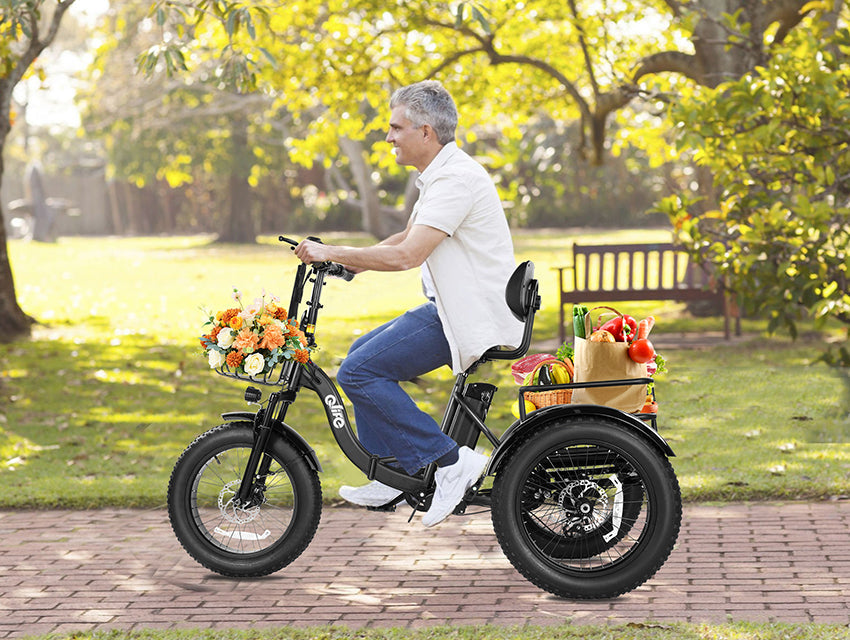
The answer to this question is simple: Yes, and for many older adults, they're one of the best ways to stay active, get outdoors, and keep their independence. A 3-wheel electric bike removes the two biggest worries that stop seniors from cycling: the need to balance and the physical effort required to keep going. What's left is the enjoyable part.
This guide covers what makes electric trikes well-suited to older riders, what to look for before buying, and which Qlife models are worth considering.
 Why Balance Becomes a Problem as We Get Older
Riding a regular two-wheel bike, whether it is electric or not, requires constant balance adjustment, and unfortunately, that gets harder with age. This is because, as you age, reaction times slow, joint stability decreases, and inner ear function, which plays a big role in balance, naturally declines. For a lot of seniors, these changes don't stop them from wanting to ride. They just make the idea of getting back on a two-wheel bike feel risky, which is understandable.

The design of a 3-wheel electric bike removes all these issues. The three-wheel base is inherently stable, including when you're completely stationary. You don't need to put a foot down at junctions, or be concerned about mounting and dismounting when you can't move your body in the same way anymore. The bike just stays upright on its own, which means you can focus entirely on enjoying the ride.
The Physical Benefits of Riding an Electric Trike
Getting older doesn't mean giving up exercise. It means finding forms of exercise that work with your body to keep you strong and active, prolonging your life, and improving your quality of life. An electric trike does exactly that.
 Pedaling an electric trike gives you a great cardiovascular workout. The motor assists your effort, so you're not grinding through every hill at full exertion, but your legs and heart are still working. Studies on e-bike riders consistently show that people cover more distance and spend more time exercising on an electric bike than on a regular one, because the ride is enjoyable enough to keep going, not something to push through. The same applies to trikes.
For riders with knee pain or hip stiffness, low-resistance pedaling is easier on the joints than many other forms of exercise. You control how much effort you put in by adjusting the assist level. On harder days, you can let the motor do more of the work. On better days, you can pedal more and rely on the motor less.
Getting outside and moving regularly is one of the most effective ways older adults can improve both physical and mental health. A trike that's comfortable and stable makes it much easier to make that a daily habit.
What to Look for in a Senior-Friendly Electric Trike
Not all electric trikes are equally well-suited to older riders. There are a few things worth paying attention to before buying.
The seat is important. A wide, padded seat with back support makes a real difference on longer rides, and it makes getting on and off more comfortable too. A seat that's too narrow or too firm will put you off riding after 20 minutes.
Swinging a leg over a high frame is difficult if you have limited hip mobility or knee problems. A low step-through design, or a trike where you simply step onto the seat from the side, makes mounting and dismounting much easier and safer. People with mobility issues are injured more when mounting and dismounting a regular high top-tubed bike.
One of the best things about an electric trike is that the motor-assist system affects how easy it is to ride day to day. A good motor keeps you moving at a steady, comfortable pace without requiring you to pedal hard. Look for a model with multiple assist levels so you can adjust how much effort you feel like putting in. Some electric trikes also have a throttle mode, so you don't have to pedal at all if you're feeling tired, or just want an easy ride.
Cargo capacity is worth thinking about, too. Many older riders use their trike for errands and shopping trips, and a trike with front and rear racks can carry a week's worth of groceries without the extra weight affecting its handling.
A Note on Tipping
Electric trikes are stable, but they can still tip over. Taking a sharp corner too fast or loading the cargo racks with more weight on one side than the other can cause it to happen. It doesn't come up often during normal riding, but it's good to know about before you head out.
The Qlife Triker 2.0 is better than most basic trikes when it comes to cornering, thanks to its rear differential mechanism. On a fixed-axle trike, both rear wheels spin at the same speed, which causes friction and instability on bends because the inside and outside wheels need to cover different distances. The Triker 2.0's differential lets each wheel rotate at its own speed, so cornering feels much more like driving a vehicle than dragging a rigid frame around a turn.
The Qlife Triker Range for Seniors
Qlife's electric trike range includes two models well suited to older riders.
 The Qlife Triker 2.0 starts at $699 and is the right starting point for most seniors. It has a 1200W peak motor, a 48V 10.4Ah battery, and a real-world range of up to 55 miles on pedal assist. The top speed is 18 mph, which is comfortable and manageable for most riding situations without feeling too fast. The wide, padded seat comes with a removable, height-adjustable backrest, a feature that makes a real difference to comfort on longer rides. Front and rear cargo racks are included as standard, and the folding design means it fits in a car trunk if you want to drive somewhere and ride from there.
 For seniors who want more range or who plan to ride on varied terrain, the Qlife Triker Plus at $999 is the stronger option. The motor steps up to a 500W rated output with 70Nm of torque, making hills considerably easier. The 48V 13Ah battery extends the range to 65 miles. The tires are upgraded to 20x4.0-inch fat tires, which provide better grip and a more cushioned ride on gravel, grass, and uneven surfaces, and the top speed increases to 20 mph. If your local area has more challenging terrain, or you simply want the extra range so you never have to worry about battery level mid-ride, the Triker Plus is worth the extra cost.
Who Is an Electric Trike Best Suited For?
An electric trike is a great choice for seniors who want to stay active outdoors but aren't comfortable riding a two-wheeler anymore. It's also a good option for riders getting back into cycling after a health issue, injury, or a long break, as the stability reduces much of the anxiety that comes with relearning to ride.
Electric trikes are ideal for those who want to use their bike for practical purposes like shopping, errands, and gentle daily rides, as much as for recreation. On top of this, the cargo-carrying capacity and comfortable seating make it incredibly useful.
But, if you are still fully confident on a two-wheel bike and want to cover longer distances or commute in heavier traffic, an electric trike may not be suitable for you. In those situations, a regular electric bike is lighter and faster. But for the majority of older adults who want a safe, enjoyable, and practical way to stay active, a 3-wheel electric bike is hard to beat.
Browse the full Qlife electric trike range to find the right model for your riding.
FAQ
Are 3-wheel electric bikes safe for seniors?
Yes. The three-wheel base is stable at any speed, which removes the balance requirement that makes two-wheel cycling risky for older adults. Models like the Qlife Triker 2.0 also include a rear differential for more predictable cornering. As with any bike, wearing a helmet and riding at a sensible speed is recommended.
Do you need to pedal an electric trike?
You can use pedal assist, the throttle alone, or a combination of both. Most seniors find that using pedal assist at a moderate level gives them a good workout without excessive effort. The motor handles the hard parts so you can keep going for longer.
How far can a senior realistically ride on an electric trike?
On the Qlife Triker 2.0, you can expect a real-world range of around 33 to 38 miles on a typical mixed ride, based on 60 to 70 percent of the 55-mile claimed range. The Triker Plus gives around 39-45 miles. Both are more than enough for daily errands or a comfortable leisure ride.
Is an electric trike hard to learn to ride?
For most seniors, no. The three wheels mean you don't need to relearn balance. The main adjustment is getting used to the wider turning radius compared to a two-wheel bike, which takes a ride or two. Starting in a quiet area, such as a car park, is a good way to build confidence before riding on roads.
Can an electric trike carry shopping?
Yes. The Qlife Triker 2.0 and Triker Plus both come with front and rear cargo racks. The stable three-wheel base means a full load of shopping doesn't affect how the trike handles, which is a major advantage over a two-wheel bike.
Share:
What Should I Look for When Buying a Fat Tire E-Bike?
Are Dual Motor e-Bikes Good for Hills and Off-Road Riding?