
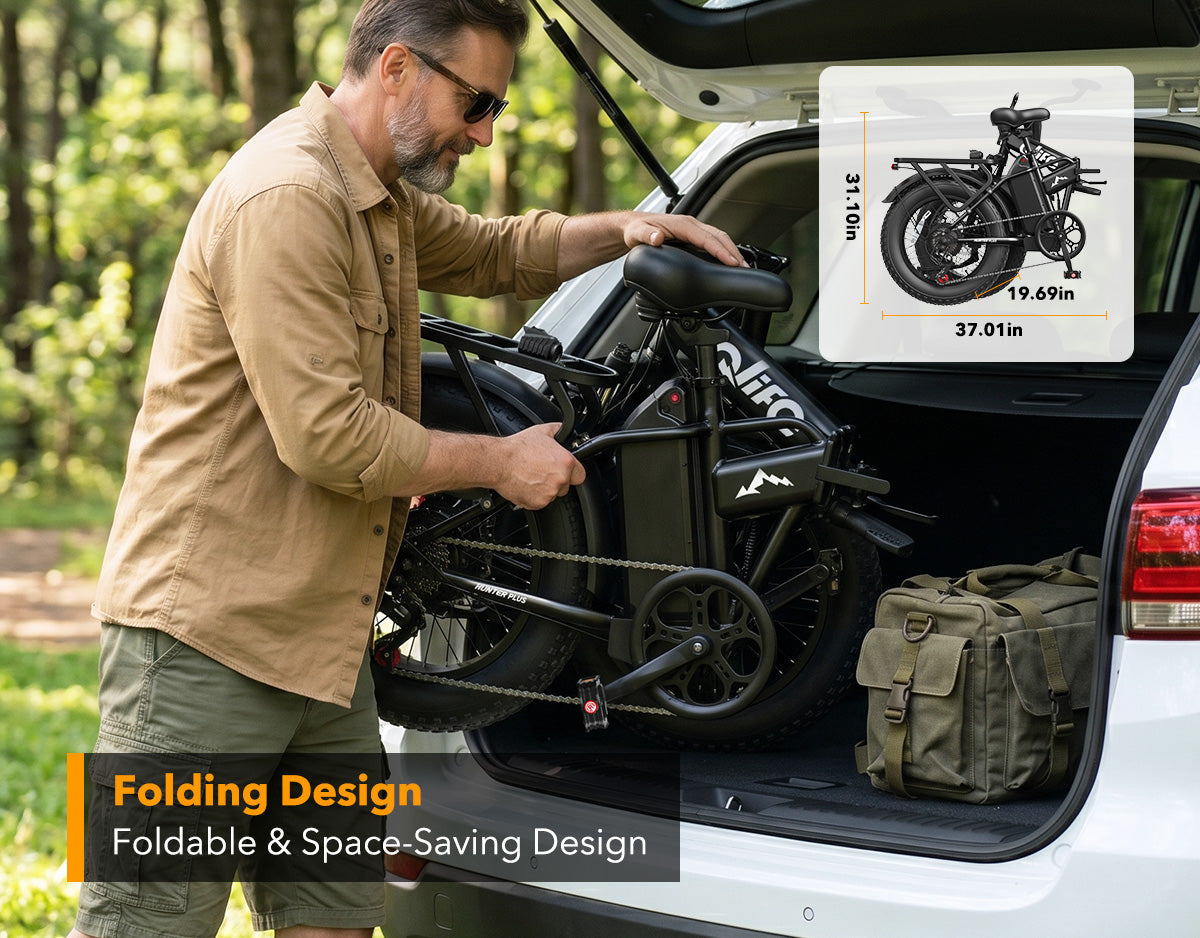
For e-bike apartment storage and charging without an elevator, three things must work separately: you can move the exact bike through the entire route, you have an allowed place to store it, and you can charge its battery according to its own instructions and the building's rules. If any one fails and there's no approved alternative, pause the purchase. A folding hinge doesn't remove a staircase, narrow landing, or charging restriction.

Trace the route from street to storage
Start where the bike will actually come home: sidewalk, parking area, or building entrance. Walk every segment to the proposed storage spot while thinking about the bike in its ready-to-carry configuration. Measure the tight turns, doorway clearances, and landing space, and count the steps on each flight. Note whether doors swing into the path, whether you need a key in one hand, and whether there's a safe place to set the bike down without blocking an exit. A listed folded size alone won't tell you whether you can turn it around a stairwell corner.
Record the bike's actual ready-to-carry weight for the configuration you will use, with accessories and lock accounted for. If the exact manual permits battery removal, verify the removal method and the actual battery-off weight separately; don't subtract a guessed battery weight from a product listing. Then assess where you can grip the bike without loading a fragile part, whether the tires or pedals strike walls, and whether you can manage the doors and landings under control. I'd reject a plan that depends on catching a falling bike at a turn. Being able to lift it once in a store isn't the same as carrying it up your own stairs after work.
| Segment | Measure or observe on site | Bike handling and unresolved issue |
|---|---|---|
| Street or parking to entrance | Surface, threshold, steps, permitted entry: __________ | Can the bike roll to the door? Where can it wait safely? __________ |
| Entrance and first door | Clear opening, door swing, lock or access control: __________ | Can I operate the door while controlling the bike? __________ |
| Stair flight | Step count, width, handrail, change in direction: __________ | Grip and carrying position; helper or approved ramp if appropriate: __________ |
| Landing and turn | Usable turning space, overhead and handlebar clearance: __________ | Can I turn or safely rest the bike without blocking passage? __________ |
| Hallway and apartment door | Narrowest opening, obstacles, door swing: __________ | Can I enter without leaving the bike unattended or obstructing an exit? __________ |
| Final storage position | Floor space, access to anchor or approved room: __________ | Can I park and retrieve it without moving shared property? __________ |
Use real measurements in the same units for the bike and openings, and allow room for your hands and the way the bike must rotate. Don't conclude "pass" from a dimension on paper alone. If you're allowed to do so, walk a cardboard footprint or another harmless stand-in through the pinch points, then arrange a safe real-bike trial before committing. Get permission for any trial in shared spaces. A helper or ramp is an option only if the building allows it and the equipment and people can handle the task; it isn't a substitute for a route that remains unsafe.
Storage and charging are different permissions
Ask the building manager or landlord for the written rules for e-bikes, removable batteries, storage rooms, hallways, and charging. Check local requirements for the address separately. A bike room may allow parking but not charging, while a unit may have an outlet but prohibit storing the bike in a shared corridor on the way there. Ask about access hours and what happens if the usual room is locked or full. Keep a copy of the answer and lease language rather than relying on a neighbor's routine as permission.
Identify two actual spots: where the bike stays when it is not charging, and where the battery or bike would be charged. For each, consider access to an appropriate outlet, security, weather exposure, ventilation and clear exits, and the instructions for the exact bike, battery, and manufacturer-approved charger. Don't assume the battery is removable, that a substitute charger is acceptable, or that an outdoor outlet is suitable. The Qlife manual library is a starting point for identifying an exact model's instructions; use the matching version, not a general article, for handling and charging details.
If a battery is damaged, swollen, leaking, unusually hot, giving off an unusual odor, or smoking, stop using and charging it. Keep people away; if there is smoke or fire, leave the area and call emergency services. Don't put yourself in danger trying to move or inspect the battery. The U.S. Fire Administration's lithium-ion battery education page also warns against blocking an exit route or fire escape with an e-bike while charging. For an intact system, follow its specific charging instructions and the building's written requirements. Ask the bike maker and building contact about any unresolved setup before treating a convenient outlet as permission to charge there. Our battery safety guide explains general questions to investigate, but the model manual and your location still govern the actual setup.
Fill out the apartment feasibility card
Mark each row pass only with the evidence in the middle column. "Unknown" means you still have a question to resolve, not a quiet yes. Write the exact person, document, measurement, or test behind the decision.
| Gate | Evidence to record | Result and next step |
|---|---|---|
| Entire route | Door widths, steps, landings, turns, bike dimensions: __________ | Pass / Unknown / Fail; pinch point: __________ |
| Weight and safe grip | Ready-to-carry weight, approved battery removal if applicable, trial: __________ | Pass / Unknown / Fail; handling concern: __________ |
| Helper or ramp if needed | Availability, building permission, equipment suitability: __________ | Pass / Unknown / Fail; backup: __________ |
| Permitted storage | Written rule, named location, access hours: __________ | Pass / Unknown / Fail; contact: __________ |
| Permitted charging | Written rule and actual charging spot: __________ | Pass / Unknown / Fail; contact: __________ |
| Exact bike instructions | Model and manual version for carrying, battery, charger: __________ | Pass / Unknown / Fail; question for support: __________ |
| Bike security | Authorized anchor or controlled room and access plan: __________ | Pass / Unknown / Fail; fallback: __________ |
Imagine a folding bike that fits through the apartment door but cannot rotate on the stair landing while someone is holding it securely. The folded specification looked promising, yet the route gate fails. Or the route passes and the building allows storage in a room but forbids charging there, with no permitted charging spot elsewhere. That is a charging gate failure. Neither problem is solved by a smaller folded dimension or a removable battery unless the specific route, manual, and written rules support the revised plan.

If one row is unknown, ask the relevant building contact, seller, or manufacturer before buying. If a row fails, investigate an approved ground-floor storage option, a different access route, or a bike you can actually handle, while checking charging permission separately. Don't leave a bike in a stairwell or exit as a workaround. If no workable, permitted arrangement emerges, this apartment and bike are not a match right now. Our folding e-bike buying guide can help you compare form factors after the route and building rules are clear.
Once you have an authorized parking place, the e-bike locking plan helps you secure the frame and removable parts without mistaking a shared room for guaranteed security.
Share:
Buying a Used E-Bike vs a New Budget E-Bike: Battery, Parts and Test-Ride Checklist
Qlife E-Bike Assembly Check: Racer, Spark Plus and Triker 2.0