
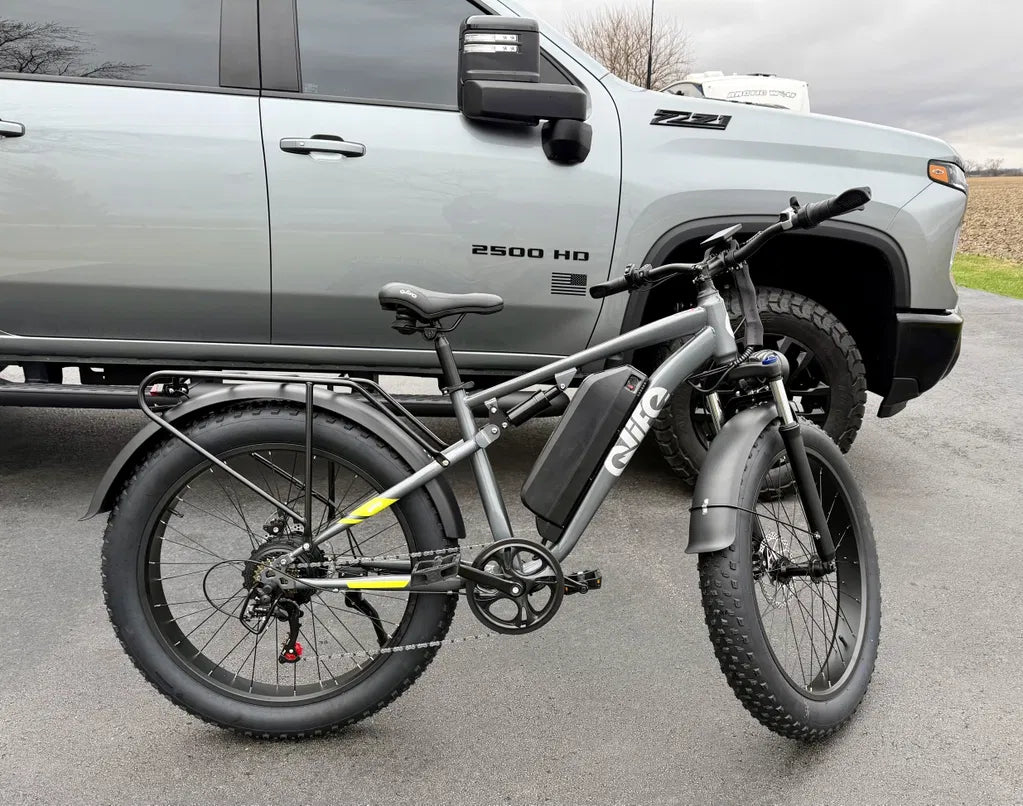
To lock an e-bike for work or errands, secure the frame to a fixed anchor where parking is allowed, then decide how to protect the wheels and removable parts for the time you'll be away. Look at the location before you reach for the lock: an anchor you can lift a bike over, a loose signpost, or a rail the property owner doesn't permit is a poor plan. No lock makes a bike theft-proof. I treat locking as a series of choices that make an ordinary stop less exposed, not as a promise that the bike will still be there when I return.

Start with the anchor, not the lock
Choose a rack or other authorized, solid fixture fixed to the ground or building. Check that the bike and closed lock can't simply be lifted off its open end. Give the fixture a look for loose bolts, damaged joints, or a section that could be slipped apart. A pretty rack in an empty corner isn't automatically a better spot than a permitted rack near people and lighting. Visibility may help you notice trouble, but passing foot traffic isn't a security system.
Put the lock through a structural part of the frame and around that anchor, following the lock maker's instructions. Don't rely on a removable front wheel, a saddle rail, or a decorative frame accessory as the sole connection. Check that the lock closes fully and that the bike can't be rolled away with the secured piece left behind. If a wheel is outside the main lock's reach, decide whether a second suitable lock or a properly routed cable is needed for that wheel. A cable used alone is not the same choice as a robust primary lock. Match the actual lock and anchor to the site and your risk tolerance; a brand name or a reassuringly heavy feel can't tell you whether a parking spot is sound.
Removable batteries and displays deserve their own decision. If the exact bike's instructions permit removal, consider taking them with you when you'll be gone a while, and plan where they can be stored without damage. Don't tug on a part you haven't learned to remove or leave an exposed connector where it can be damaged. A locked-on battery still leaves the whole bike at risk. Likewise, taking the battery doesn't make an unsecured frame safe.
Three parking plans for real stops
Use this table before you commit to a regular parking place. Record an actual anchor and a named place, not just "outside work." The last column matters when a rack is full or the workplace closes unexpectedly.
| Stop | Authorized place and anchor check | Bike and parts plan | Record and fallback |
|---|---|---|---|
| Short errand | Choose a permitted rack near the destination. Confirm it is fixed and cannot be lifted off or easily dismantled. | Lock the frame to the rack; include a wheel when the lock can do so correctly. Decide whether the other wheel and removable display need separate protection. | Note the location before walking away. If the rack is full or unsuitable, use another permitted spot rather than leaving the bike unlocked for "just a minute." |
| Full workday | Ask for the designated bike area, access hours, and whether an indoor or monitored space is actually available to you. Check the anchor there. | Secure frame and wheels for a longer absence. Follow the bike manual for any removable battery or display and arrange a permitted place for them. | Keep the building contact and a second authorized parking option. Photograph the parked bike and rack if that is permitted at the site. |
| Overnight | Prefer an approved, access-controlled storage place if available; verify its door, anchor, and rules rather than assuming a shared room is secure. | Lock to a sound fixture and account for wheels and removable parts. Don't let a hallway or exit become storage just because it is convenient. | Document the location and who can enter. If the only space is prohibited or cannot secure the bike, make a different storage plan. |
These aren't three prescribed lock products. They're three different exposure periods. The quick stop still needs a frame-to-anchor connection; the workday adds access and removable-part questions; overnight storage makes the building itself part of the decision. If the overnight plan is an upstairs apartment, our apartment storage and charging feasibility card checks the route and the building's separate permissions. I'd spend more time checking the all-day workplace arrangement than comparing locks in a store while the actual rack remains a mystery.
Ask the building before your first commute
- Where may an e-bike be parked, and must it be locked to a particular rack or kept in a designated room?
- What are the access hours, and what happens if I leave late or the bike room is full?
- Are removable batteries allowed in the bike room, at a desk, or elsewhere? Is charging allowed at all, and under what written rules?
- Are there cameras or controlled doors, and who handles an access or theft report? A camera's presence doesn't guarantee usable footage.
- Can I get the current bike-storage and charging rules in writing, including any restrictions on hallways and exits?
Keep the reply with your commute notes. A manager's casual "should be fine" may not match the lease, workplace policy, or building access rules. If your intended spot is not approved, don't build a daily routine around it. For choosing a bike with storage and commute needs in mind, see our commuter e-bike buying guide.
Check insurance terms before you need them
Don't translate "my bike is covered" into "this theft will be paid." Read the current policy and ask the insurer or agent about the exact bike and where it will be parked. Coverage, limits, exclusions, deductibles, and evidence requirements depend on the policy. This record is a way to find the relevant wording, not an estimate of reimbursement.
| Question | Policy section or written answer to record |
|---|---|
| Bike and accessories | Exact bike, battery, display, added parts: ____________________ |
| Theft location | Work rack, shared room, home, or street: ____________________ |
| Lock or storage condition | Required lock, anchor, or locked room, if any: ____________________ |
| Limits and deductible | Applicable limit, deductible, and policy page: ____________________ |
| Exclusions | Relevant exclusions and unresolved questions: ____________________ |
| Claim evidence | Receipt, serial number, police report, lock proof, or other stated requirements: ____________________ |
| Contact and date | Insurer or agent, response date, claim route: ____________________ |
Where wording is unclear, ask for a written explanation tied to the policy, including whether a workplace rack and a shared apartment room are treated differently. Save the answer, but don't assume a conversation changes the contract. If a particular lock rating is required, identify the exact standard and conditions in the policy before buying the lock.
Prepare a recovery packet while the bike is in front of you
Record the frame's serial number exactly as marked, its location on the bike, the model and identifying color, and the purchase document. Take clear pictures of both sides, the serial marking, distinctive accessories, and the lock you normally use. Keep the original documents and photos somewhere you can reach without the bike. You can also record battery or display identifiers if present and relevant, but keep purchase and serial details in a private record rather than posting them all publicly.
If a bike disappears, record when and where you last saw it, the rack and lock condition, any nearby camera location, and the contact for the property. Follow the local reporting process and your insurer's stated claim process promptly; provide factual details, not guesses about who took it. Don't confront a suspected thief or treat an online listing as proof on your own. The packet improves the quality of a report, not the odds of recovery by any guaranteed amount.
Before your next routine trip, try the proposed lock on the actual rack and bike. If the frame won't reach the fixture or the workplace won't allow that location, change the plan while you still have time to choose another spot. Keep the approved location, fallback, and building contact with your commute notes so a full rack doesn't turn into an unlocked stop.
Share:
How to Choose a Car Rack for a Heavy E-Bike: Bike, Rack, Hitch and Vehicle Limits
Torque Sensor vs Cadence Sensor for Hill Starts and Stop-and-Go Riding