
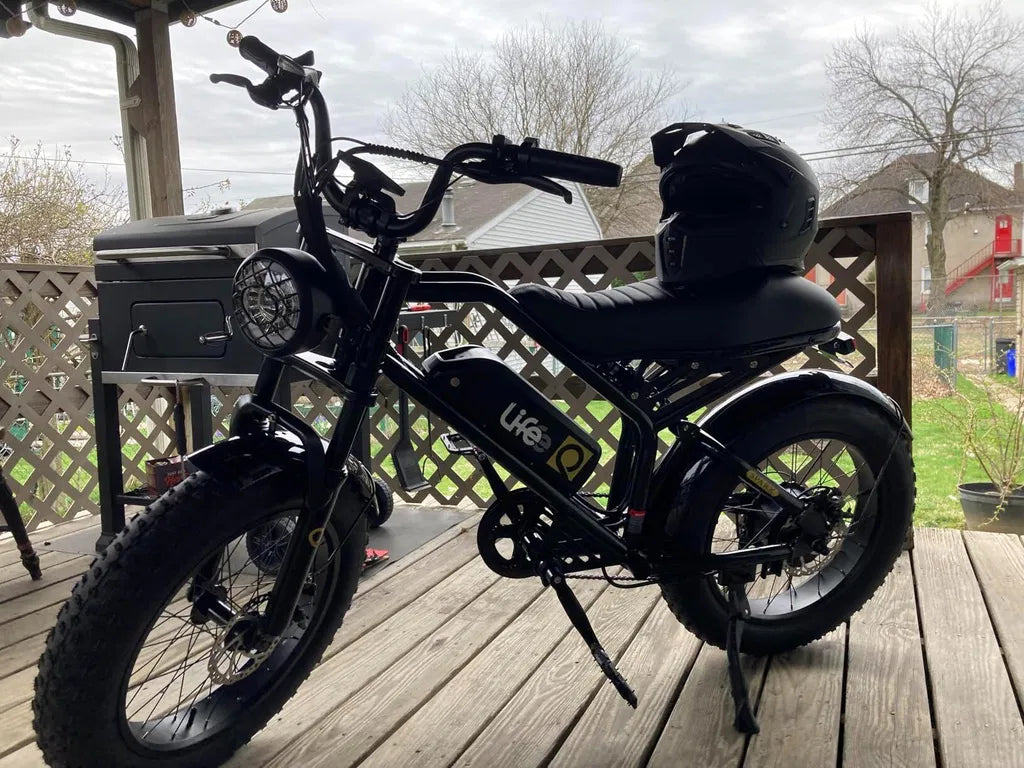
A used e-bike can beat a new budget e-bike when the seller can establish the bike's identity and ownership, its battery and charger can be evaluated, compatible parts and service are available, and the full purchase cost still makes sense. The asking price alone settles none of that. Walk away from a sale with a tampered or mismatched serial number, an ownership story you cannot reconcile, a damaged frame you cannot clear with a qualified shop, or a battery showing swelling, leakage, unusual heat, odor, or smoke. Don't charge or test a suspect battery to see whether it "settles down."

Match the seller's story to the bike
Ask for the exact brand, model, version, serial number, original purchase record, and any service history. Look at the number on the bike itself and compare it with the seller's documents. A match is useful evidence, not conclusive proof of title; a missing receipt isn't by itself proof of wrongdoing. What matters is whether the seller can give you a coherent account and a legitimate sale. Check a relevant stolen-bike reporting resource if available, but don't treat a clean search result as a guarantee.
Find out what is included: the original or manufacturer-approved charger for that exact battery, keys, battery, display, manuals, and any accessories. Ask whether the battery or controller has been replaced and for documentation of the replacement's compatibility. A plug that fits doesn't establish electrical compatibility. Photograph labels with the seller's permission and use the exact identifiers when you contact the manufacturer or a qualified shop. Don't publish a stranger's receipt or personal information to crowdsource a verdict.
Request a lawful, permitted test ride, with a place to inspect the bike before money changes hands. If the seller refuses any reasonable identity check or insists that you buy before seeing the bike work, I'd pass. A marketplace description saying "like new" isn't an inspection report.
Grade the battery evidence, not the charge bars
A display's charge bars tell you something about the reported charge at that moment. They don't measure remaining capacity, prove internal condition, establish charger compatibility, or rule out hidden damage. A short ride may reveal an obvious fault, but a smooth short ride doesn't validate a used battery. Ask what documentation exists and whether a qualified service provider can assess it for the exact system. Don't demand a universal "battery health percentage" if the manufacturer doesn't offer that kind of report.
| Level | What you actually have | What remains open | Next action |
|---|---|---|---|
| Documented | Identifiable battery and charger, purchase or replacement history, and a dated diagnostic or health record from an appropriate source for that system. | Record date, method, and whether the report applies to this battery: __________ | Confirm the seller's record matches the labels; still inspect physical condition and ask about replacement support. |
| Partial | Some records or a seller account, but no applicable diagnostic record. | Which claims are only verbal? __________ | Ask for a qualified assessment or a written quote for the uncertainty before treating the listing as a bargain. |
| Unverified | No usable records, mismatched identifiers, or an unavailable inspection. | What cannot be checked? __________ | Do not assign the battery an assumed value or life. Pause or decline if the uncertainty cannot be resolved. |
If there are signs of heat damage, swelling, leakage, unusual odor, or smoke, stop the inspection and do not charge or ride the bike. Follow the manufacturer's and local emergency guidance for the situation. Evidence grading is for an apparently intact system, not a way to justify testing a visibly suspect pack. For a broader explanation of battery and charger questions, read our cheap e-bike battery safety guide, then check the instructions for the exact bike in front of you.
Inspect the whole bike and price the work
Look for cracks, bent sections, corrosion, nonstandard wiring, missing fasteners, and signs of impact or water exposure. Check that the wheels run without obvious wobble, tires are sound, brakes operate, and the drivetrain shifts and pedals normally. Don't diagnose a frame or electrical fault by eye if you aren't qualified; use the observation to decide whether a shop inspection is needed. Replacement brake parts, tires, a wheel, and labor can change the comparison even when the motor seems fine.
On a permitted ride, start in a safe place, test braking at controlled speed, work through the assist settings allowed by the bike, and note any fault messages, cutouts, odd noises, or unpredictable response. Stop if control or braking is uncertain. Record what happened in the setting used; don't declare a battery healthy because the display stayed lit. If you are comparing two different assist systems, the torque-versus-cadence test-ride card helps separate what you felt from a guess about the sensor. Ask a shop in advance whether it will work on this exact model and which mechanical and electrical jobs it can take. Our shop-and-seller service record makes those answers easier to compare. A willingness to fix a flat doesn't mean a shop can source a controller.
Get actual written quotes where possible, including the exact compatible part and labor. If no replacement battery or charger can be confirmed for this version, mark that as unknown, not a guessed amount. For a used Qlife bike, the part-request card helps you ask support about the exact battery or controller before assigning a cost. Compare a specific new bike with current terms, not an imagined "new budget e-bike." Our guide to e-bikes under $800 and Qlife budget-bike guide can help form questions, but their titles are not current quotes.
| Decision item | Used listing | Specific new alternative |
|---|---|---|
| Exact model and seller | Record: __________ | Record: __________ |
| Asking or checkout price and date | Written price: __________ | Written price: __________ |
| Known parts and local labor | Itemized quote and shop: __________ | Setup or expected work quote: __________ |
| Battery and approved charger | Evidence level, exact-fit availability, quote if needed: __________ | Included system and replacement route to confirm: __________ |
| Other transaction costs | Transport and applicable fees to verify: __________ | Delivery, assembly, and applicable fees to verify: __________ |
| Return and warranty terms | Written return terms; transferability confirmed with issuer: __________ | Current written return and warranty terms: __________ |
| Service and parts path | Shop and supplier response: __________ | Shop and supplier response: __________ |
| Total known cost and unresolved risk | Price plus quoted work: __________; unknown or unrepairable: __________ | Price plus quoted work: __________; unknown: __________ |
Add only actual amounts and quote dates; keep unknowns visible instead of assigning them zero. A transferable warranty is useful only when the warranty issuer confirms that it covers this buyer and bike. A return policy may have conditions, shipping costs, or no application to a private sale. Read the terms rather than assuming "new" means any particular protection.
Used, new, or neither?
I'd buy used when the identity checks out, the bike is inspectable, service and exact-fit parts are available, and the quoted total leaves a trade-off I'm comfortable accepting. Documented battery evidence helps, but it doesn't erase future wear. I'd lean toward the particular new alternative when used-bike repairs or battery uncertainty consume the apparent saving and the new terms are materially better for the buyer. This is a comparison of two real offers, not a claim that every new bike is safer or cheaper.
Choose neither if a safety concern remains unresolved, the used bike has no credible service path, or the new bike doesn't fit your riding and support needs. A cheap listing isn't a deadline. Keep the evidence grade and actual quotes beside the listing; if a seller can't resolve the one unknown that changes your decision, let this bike go.
Share:
Torque Sensor vs Cadence Sensor for Hill Starts and Stop-and-Go Riding
Where to Store and Charge an E-Bike in an Apartment Without an Elevator