
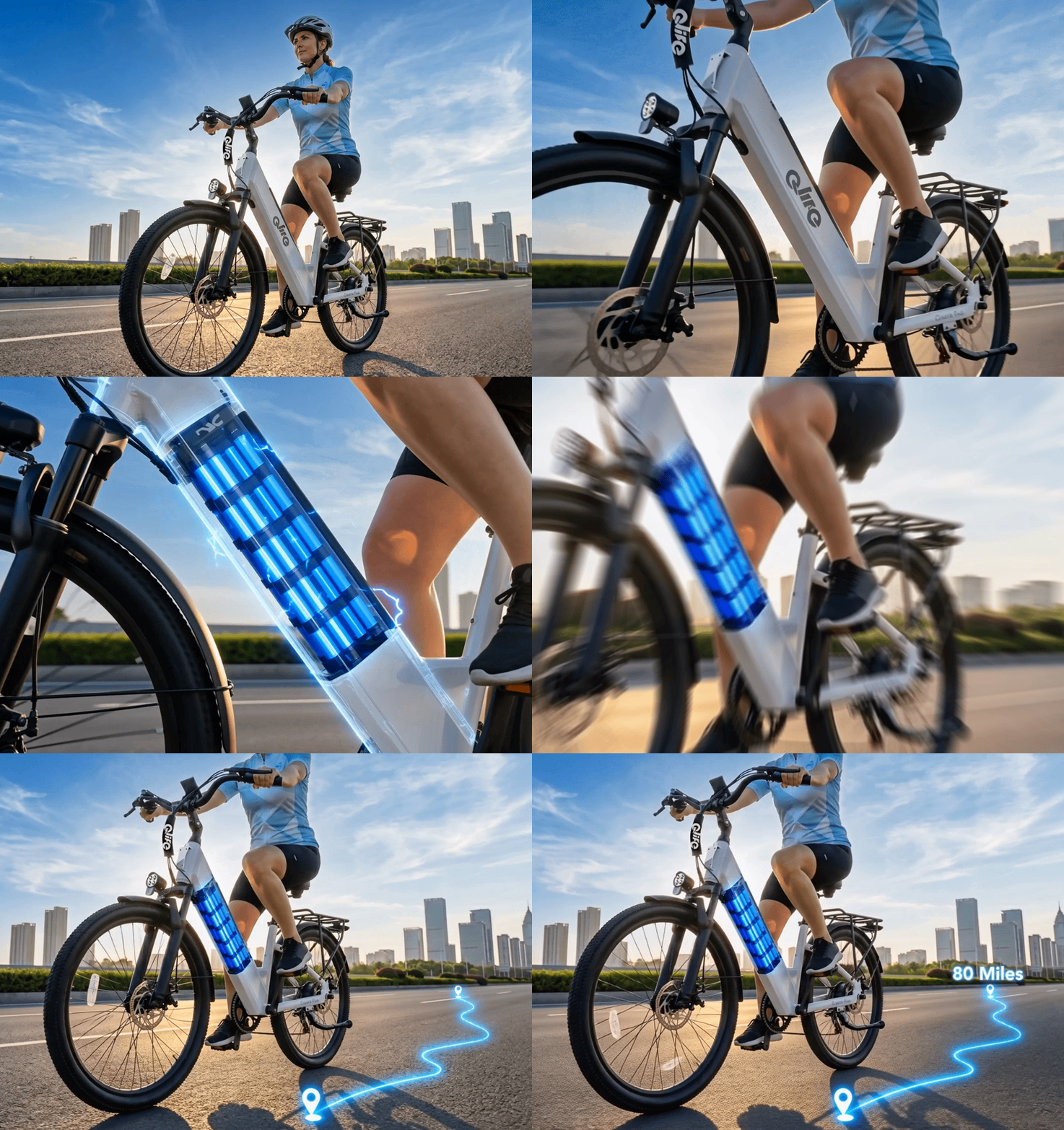
We’ve all seen horror stories about lithium-ion batteries catching fire. While these events are rare, passenger airlines and other public transport can restrict lithium-ion batteries. For budget shoppers buying an e-bike, it’s reasonable to wonder whether a lower price means taking a greater risk with a large lithium-ion battery stored inside their home.
An affordable e-bike is not automatically unsafe. Safety depends on the complete electrical system, compatible components, manufacturing and certification, physical conditions, and charging environment.
Any lithium-ion battery can become damaged and dangerous. Following the manufacturer’s instructions reduces the risk considerably, but it cannot eliminate it.
Quick Battery Safety Checklist Before You Buy
Battery safety is not rocket science. Most of the advice is common sense: keep the battery cool and dry, do not leave it charging for days, and always use the charger supplied or approved by the manufacturer.
CPSC guidance advises owners to remain present while charging and to avoid charging while asleep or away from home. That does not mean watching the battery every second, but it should be somewhere nearby where you can notice a problem quickly.
This is one reason many riders prefer a removable battery: it is often easier to bring indoors and charge in a suitable space.
Before buying, check:
- The correct charger is included. Avoid relying on random universal chargers.
- The battery is removable, if that suits your home. This can make indoor charging and storage easier.
- Clear charging instructions are provided. You should know how long charging takes and when to unplug it.
- The battery and charger look undamaged. Cracks, frayed cables, or loose connectors are warning signs.
- Warranty and support are available. You should know whom to contact if the battery behaves unexpectedly.
Cheap Does Not Automatically Mean Unsafe
Price does affect battery quality. More expensive batteries can mean greater capacity (measured in watt-hours). However, two batteries with the same capacity can vary considerably in cell quality and consistency, battery management system protections, and casing, seals, and impact resistance.
The construction of the complete pack also matters, not just the cells inside it.
That said, a cheaper battery is not automatically more unsafe. It really comes down to the manufacturer's commitment to safety. Some will cut corners to save money; others will prioritize safety even at a lower price.
That’s why it’s best to opt for a reputable manufacturer with a good history of battery quality. Qlife, for example, provides downloadable manuals for numerous models, and all batteries have a one-year pro-rated warranty.
UL 2849 Looks at the Whole Electrical System
UL develops safety standards covering different parts of e-bike battery technology. Two are particularly relevant:
- UL 2271 covers the battery pack itself. It evaluates batteries used in light electric vehicles for risks such as fire, explosion, and electric shock.
- UL 2849 covers the complete e-bike electrical system. It evaluates how the battery, charger, motor, and electrical drivetrain work together safely.
UL 2849 really matters and cannot be ignored. System-level evaluation highlights how a battery can still be placed at risk by an incompatible charger, controller, or wiring setup. It addresses electric and fire risks, including electric shock during charging.
Always note the precise wording used in claims: “tested to” and “certified to” are not automatically interchangeable claims. Certification should come from an appropriately accredited certification body and should be verified through current documentation of the certification body’s database.
Qlife battery packs were tested to UL 2271, and the complete electric system was tested and certified to UL 2849 by TÜV Rheinland.
The Battery, Charger, and Controller Have to Match
An e-bike isn’t as complicated as a combustion engine. There are fewer moving parts, meaning fewer things can go wrong. But the handful of functional parts must match, or it can create problems.
You need to consider:
- The battery pack stores the energy.
- The battery management system monitors functions such as voltage, current, and temperature.
- The charger supplies electricity at the voltage and charging rate required by that battery.
- The controller regulates the power sent from the battery to the motor.
- The motor converts that electrical power into movement.
Matching the connector alone is not enough. Charger voltage, charging current, polarity, control functions, and battery chemistry must all be compatible.
At best, it will fail to charge the battery. But it can also damage the charger, battery-management system, or cells. Too much voltage or current can cause overheating and overcharging, while reversed polarity can damage electrical components immediately. In the worst case, the battery can ignite and cause a serious fire.
Think of it like putting diesel in a gasoline engine. It’s just not worth the trouble.
CPSC advises using the charger provided with or recommended by the manufacturer because incompatible chargers can create a fire hazard. Qlife designs some of its batteries for a specific model. Always use the associated charger.
Charge Where You Can See It, Not Where It Can Trap You
The best charging location is dry, cool, and ventilated. You want to avoid direct sunlight, heaters, or extreme temperatures — anything that can spike the temperature.
While the risk of fire is minimal, keep it away from curtains, paper, clothing, bedding, or other flammable clutter. If you can’t remove the battery, never position the bike where it blocks a doorway, hallway, stairway, or fire escape.
CPSC, as mentioned, advises owners to remain present during charging and never charge while sleeping or away from home.
|
Do |
Don’t |
Why it matters |
|
Use the supplied or approved charger |
Use a random universal charger |
The charger must match the complete battery system |
|
Stay present and awake |
Charge overnight or while away |
Problems can develop while the battery is connected |
|
Charge in a clear, dry space |
Charge beside curtains, bedding, or paper |
Keeps flammable materials away |
|
Keep exits and hallways clear |
Leave the bike blocking a doorway |
Preserves an escape route |
|
Inspect the pack and cables |
Charge damaged equipment |
Physical damage can indicate an electrical risk |
|
Follow the manual |
Modify connectors or wiring |
Unauthorized changes can defeat safety protections |
Stop Using a Battery That Starts Acting Strangely
Lithium-ion battery fires have increased significantly, with a 46% rise in incidents reported between 2022 and 2023. Over a recent five-year period, there were at least 25,000 incidents of fire or overheating associated with these batteries in the U.S. alone
A lot of problems come from a lack of education. Most people don’t know how to look after a lithium-ion battery or when it’s potentially dangerous.
Follow this guidance:
|
Warning sign |
What it may indicate |
Recommended action |
|
Cracked or dented casing |
Impact or internal damage |
Stop use and contact the manufacturer |
|
Swelling or shape change |
Cell failure or gas generation |
Do not charge; seek manufacturer guidance |
|
Unusual heat |
Charging or internal fault |
Disconnect only if safe and contact support |
|
Smell, leakage or discoloration |
Chemical or internal damage |
Keep away and seek professional guidance |
|
Hissing, popping or venting |
Possible thermal runaway |
Evacuate and call emergency services |
|
Smoke or fire |
Active emergency |
Leave immediately and call 911 |
If a battery appears damaged but is not actively smoking or overheating, stop using it and contact the manufacturer for instructions. If there is smoke, fire, rapidly increasing heat, or venting gas, leave the area and call emergency services. Do not attempt to carry the battery through the building or extinguish a lithium-ion battery fire yourself.
Used Bikes and Replacement Batteries Need More Scrutiny
When you purchase an e-bike from a brand, you can read their product documents, see how the battery was tested, and know that it was never used before.
The same isn’t true for used bikes and replacement batteries. While the bike itself might be in good condition, you have no idea how the battery was stored, charged, and used.
For a used e-bike, ask for:
- The original charger
- The model manual
- Proof of purchase, where available
- Battery age
- Approximate mileage or charging history
- Details of crashes, water exposure or repairs
- Confirmation that the pack has not been opened or rebuilt
- Information about remaining warranty coverage
Don’t assume just because the battery looks okay, that it’s safe to use. If in doubt, buy a replacement battery for a used e-bike.
For replacements, always match the bike model, voltage, mounting system, connector, and manufacturer requirements. Avoid generic packs that are merely described as “compatible.” Qlife sells model-specific spare batteries, so you can clearly know which to buy. Contact our team if you’re unsure which spare to opt for.
 Eight Questions Worth Asking Before You Buy
You don’t need to overcomplicate finding a good battery. It really comes down to a few basic questions:
|
|
Reassuring evidence |
Reason for caution |
|
1. What certification applies? |
Exact standard and model listed |
Vague “safety tested” claims |
|
2. Which charger is included? |
Charger matched to the bike |
Generic or unspecified charger |
|
3. Are replacement chargers available? |
Approved replacements are sold |
Reliance on universal chargers |
|
4. Is the battery removable? |
Removal and charging are explained |
Unclear or awkward battery access |
|
5. What does the warranty cover? |
Clear battery period and process |
Vague terms or major exclusions |
|
6. Are replacement batteries available? |
Model-specific packs are available |
Unknown third-party replacements |
|
7. Is the manual available? |
Model-specific instructions can be downloaded |
No clear charging guidance |
|
8. How can I contact support? |
Email, phone or support form listed |
No obvious contact route |
Safe Ownership Starts Before the First Charge
Safe e-bike battery ownership depends partly on the manufacturer and partly on you. Choose a battery that has been properly tested and designed to work with the bike’s electrical system. Charge it in suitable conditions, away from excess heat and with the correct charger.
Qlife provides downloadable manuals, warranty information and safety-testing details to help buyers make an informed choice. Browse our under-$800 collection and check the documentation for the specific model you are considering.
 FAQs About Cheap E-Bike Battery Safety
Are Cheap E-Bike Batteries Safe?
Price alone doesn’t guarantee safety. Certification, manufacturing, charger compatibility, physical condition, documentation, and owner behavior all matter.
What Does UL 2849 Mean for an E-Bike?
UL 2849 is a testing standard evaluating the combined electrical drivetrain, battery, and charging system, rather than a performance rating.
Is UL 2849 the Same as Battery Certification?
No. UL 2849 evaluates an e-bike’s complete electrical system. UL 2271 (battery certification) applies specifically to light electric vehicle battery packs.
Does UL 2849 Mean an E-Bike Cannot Catch Fire?
No. UL 2849 certification indicates that an e-bike’s electrical system has been evaluated against the standard, but it does not eliminate all risk. Damage, incompatible equipment, modifications and unsafe charging can still create hazards.
Can I Use a Universal Charger for My E-Bike?
It’s not recommended. Most e-bikes are designed with a specific charger in mind. It’s best to use the battery-specific charger, which matches the electrical system of the e-bike. Failing to do so can damage the battery and increase the risk of hazards.
Should I Charge My E-Bike Overnight?
No. CPSC guidance says not to charge micromobility devices while sleeping or when nobody is home. It’s always best to charge when you’re present and can react if something goes wrong.
Where Should I Store My E-Bike Battery?
It’s best to store your e-bike battery in a cool, dry location away from direct heat, moisture, flammable materials, and exits, following the model-specific manual.
What Should I Do if My E-Bike Battery Gets Hot?
Most e-bikes will get warmer during charging. Mild warmth is not unusual. However, if the battery is very hot or rapidly warming up, stop charging and contact the manufacturer. Evacuate and call emergency service if there is smoke, venting, or fire.
Are Used E-Bike Batteries Risky?
They can be. With a used e-bike battery, you cannot know age, charging history, water exposure, impacts, and repairs, which makes them harder to assess. Used does not automatically mean unsafe, but the checks must be stricter.
How Do I Know if a Replacement Battery Is Compatible?
The best option is to buy the exact model-specific replacement approved by the manufacturer. Verify the model, voltage, connector, mounting system, charger requirements and manufacturer approval before use.
Share:
Best Electric Bikes Under $1,200 for Hills and Heavier Riders
Real-World Ebike Range Under $800: How to Read Volts, Amp-Hours, and Watt-Hours