
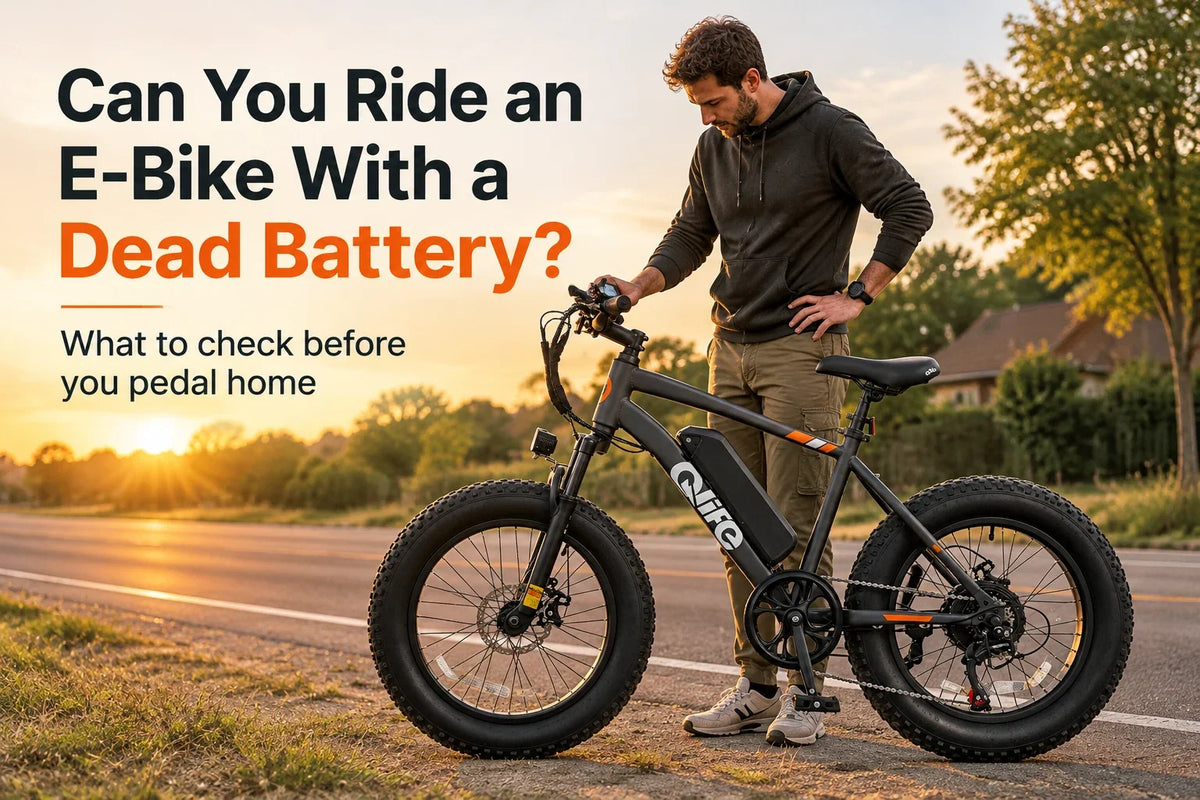
Can you ride an e-bike with a dead battery? On most electric bikes, yes: you can still pedal the mechanical drivetrain once normal assist runs out. The bike will feel noticeably heavier and slower than it does under power. SCOTT's support page says an e-bike remains pedalable with its drive unit off, though effort varies by model. Before you keep pedaling, confirm whether the pack simply reached zero or whether the electrical system cut out unexpectedly.

The Short Answer: Usually Yes, but the Bike May Feel Very Different
Can you ride an e-bike with a dead battery? In a normal low-battery runout, the chain, cassette, and pedals remain available for pedaling on most e-bikes. What changes immediately is the physical workload. You are now moving the full mass of the motor, battery, frame, and tires with your legs alone, and depending on how the motor's internal freewheel or clutch is built, you may also feel extra drivetrain drag.
An empty battery gauge at the end of a long ride is one thing. A sudden power shutdown with bars still showing on the display, an error code, a hot smell, or a wheel that starts dragging is something else entirely. Do not treat an electrical or mechanical fault like a normal empty battery.
Three Situations That Riders Call "a Dead Battery"
Riders use "my battery died" to describe three very different moments on the road. Your next move depends on which one just happened:
| Situation | What may be true | Recommended response |
|---|---|---|
| Battery display reaches empty during a normal ride | The battery management system has cut motor assist as the usable charge ran out | You can usually keep pedaling if the bike rolls freely and the brakes work normally, though effort depends on bike weight, gearing, and hills |
| Battery has been removed or will not latch | Frame terminals may sit exposed, and display-powered lights, electronic shifting, or system guards may behave differently by model | Check your exact model manual before riding without the pack; do not expose open battery terminals to rain, road spray, or metal objects |
| Assist cuts out unexpectedly with charge remaining, an error appears, or resistance spikes | An electrical or mechanical fault may have interrupted assist | Pull over to a safe spot immediately; do not repeatedly cycle power to force the motor on or open energized connectors on the roadside |
If your e-bike power cut out mid-ride and you notice heat coming from the pack or motor hub, smoke, a sharp electrical odor, visible cable damage, or any change in braking performance, stop riding right away. Move to a safe spot away from traffic, leave the system powered off, and follow the manufacturer's support or emergency guidance. For troubleshooting non-emergency power drop issues on our bikes, see our guide to Qlife replacement battery, controller, or display support.

Why Some E-Bikes Are Harder to Pedal Without Assistance
When you have to pedal an e-bike with no power, two separate factors decide how hard your legs work: total bike mass and motor or freewheel drag. Riders mix them up all the time, but they come from different parts of the bike.
1. Total bike mass and rolling setup
Even if a motor spun with zero internal friction, an e-bike weighs substantially more than a regular road or hybrid bike. On flat pavement, once you get that mass rolling in a low gear, keeping momentum is manageable. Point the front wheel up a hill, add a headwind, or try to accelerate from a stoplight on wide, low-pressure tires, and every extra pound makes itself known in your legs.
2. Motor architecture and internal freewheel design
How the drive unit decouples when powered off depends on the specific motor architecture:
- Geared hub motors with internal freewheels: Grin's technical guide says almost all geared hub motors include a freewheeling clutch, letting the wheel turn without back-driving the motor while coasting. The guide also notes exceptions, including geared designs with a locked clutch.
- Direct-drive hub motors: Grin's guide explains that direct-drive hubs do not use an internal clutch to disconnect the wheel from the motor. As the wheel turns, the rotor magnets pass the stator, creating some motor drag while coasting.
- Mid-drive systems: Mid-drive effort depends on how the internal freewheel or clutch is engineered. TQ's support FAQ explicitly says the HPR50 uses "freewheel sprags" to disengage the motor and transmission when riding without assistance. That explanation applies to TQ's HPR50 system, not every mid-drive on the market.
Hub motor and mid-drive are broad categories, not single blueprints. Check your system documentation before assuming how it will coast.
3. Electronic shifting and integrated lights
Mechanical derailleurs do not need system power to shift. On electronic systems, shifting and lighting behavior after assist stops varies by model: SCOTT says its Shimano Di2-equipped e-bikes retain 100 emergency shifts after the battery runs out, while Trek says its systems may retain enough reserve to run lights and shifters briefly after motor support stops.
A Practical Return-Home Decision When Assist Stops
When the assist drops out five miles from your driveway, don't just put your head down and grind. Take sixty seconds to run a quick roadside check:
- Pull completely off the travel lane and inspect the display. Did the battery indicator step down gradually to empty, or did the screen go blank or flash an error code while showing half a pack? If there are no signs of heat or damage, check that a removable battery is fully seated and latched. Then lift or roll the bike a few feet by hand to verify that both wheels spin freely without rubbing or binding.
- Audit your route, your gearing, and your daylight. If the battery simply ran out of charge and the bike rolls and brakes normally, shift down into your easiest mechanical gears before you start pedaling again. Ask yourself an honest question: given the remaining miles, hills, traffic speed, cargo load, and remaining daylight (especially if your headlight runs off the main battery), is pedaling home safe and realistic?

- Stop if you spot fault symptoms. If the power cut out unexpectedly, the rear wheel feels like a brake is dragging, you smell hot electronics, or a brake lever feels wrong, stop treating the problem like an empty gas tank. Park the bike and arrange a pickup.
- Use a backup plan when the route isn't workable. Pushing the bike up a steep sidewalk hill, calling a ride with a vehicle rack, or taking a bus or train beats exhausting yourself in fast traffic. If you plan to board a bus or train, check our guide to public transit e-bike rules first, since many bus front racks and commuter rail lines enforce strict weight and tire-width limits that heavy or fat-tire e-bikes exceed.

Does Removing the Battery Make Pedaling Easier?
If your bike has a removable battery pack and a friend in a car or a secure locker can hold it, taking the pack off the frame drops several pounds of dead weight. On a hilly ride home, shedding the battery's weight is noticeable.

However, removing the battery does not change the motor's internal freewheel or clutch resistance, and it introduces two practical wrinkles you need to check before riding:
- Exposed frame terminals: With the battery out of the cradle or downtube, the metal discharge pins may be exposed to road grit, puddles, and rain. Do not ride in wet conditions with exposed terminals unless your bike's manual specifically approves riding with the pack removed and explains how to protect those terminals.
- System dependencies: Removing the pack kills power to the display, wired frame lights, and any electronic accessories tied to the main harness.
Before you ride an e-bike without the battery installed, check our Qlife owner's manuals for your exact model, and always reinstall and latch the battery according to the manual's instructions before your next powered ride.
Qlife Examples: Weight Is Published, Motor Behavior Still Needs the Manual
To see why two e-bikes can feel completely different when you pedal them without power, look at the published specifications for two current models in our lineup:
| Current Qlife model | Published page facts (checked 2026-11-09) | What those numbers tell you when the battery is dead |
|---|---|---|
| Our Racer Fat Tire | 59.5 lb listed bike weight; 48V 10.4Ah removable battery; 20x4.0-inch fat tires | Pedaling 59.5 lb on 4.0-inch fat tires takes real leg effort on hills, though it is over 30 lb lighter than our mopeds. The product page weight alone does not define internal motor drag. |
| Our Spark | 93 lb listed bike weight; 48V 15.6Ah removable battery; moped-style frame with 20x4.0-inch tires | At 93 lb, it will take substantial effort to pedal up hills without assist. Its moped-style saddle and footrest position may also feel less natural for sustained pedaling than a conventional bicycle position; that is an ergonomic inference, not a published claim that the saddle is non-adjustable. |
Notice what a product page tells you and what it doesn't. Listed weight and frame geometry tell you right away that pedaling a 93-pound moped-style e-bike with no power is a flat-ground fallback, not a climb-home plan. At the same time, bike weight alone does not tell you how a specific motor's internal clutch behaves; always use the matching model manual rather than borrowing assumptions from third-party systems like TQ, SCOTT, or Grin.
Avoid Reaching Zero on a Ride
The easiest way to handle a dead e-bike battery is to keep an e-bike range reserve so you never hit zero on the road.
Claimed maximum range numbers are always measured under gentle conditions. In daily riding, high assist levels, steep hills, headwinds, heavy cargo, cold temperatures, underinflated fat tires, and frequent stop-and-go intersections all burn through watt-hours much faster. If you see your battery gauge dropping faster than expected on the first half of your ride, drop your Pedal Assist Level down a notch or two early rather than running high assist until the pack shuts off.
For a deeper breakdown of how battery capacity translates to actual miles on the road, read our real-world e-bike range guide. And if you are choosing a bike for a fixed daily route where running out of charge isn't an option, check our commuter e-bike buying guide to size your battery buffer around your real round-trip distance.
FAQ
Can you pedal an e-bike if the battery is completely dead?
On most e-bikes, yes, provided the battery simply ran out of charge and there is no mechanical or electrical fault locking the drivetrain. You will feel the full weight of the bike and tires, so shift into a low mechanical gear and expect hills to take much more effort than usual.
Is an e-bike harder to pedal with the battery removed?
Removing a detachable battery makes the bike lighter by the weight of the pack, which helps slightly on climbs, though it does not reduce any internal motor or tire drag. Before riding without the battery installed, check your owner's manual to make sure exposed frame terminals are protected from moisture and road debris.
Will an e-bike motor resist pedaling when switched off?
It depends on the motor and freewheel design. Many geared hub motors and certain mid-drives use internal freewheel clutches that disengage when unpowered, while direct-drive hub motors stay coupled to the wheel and create slight magnetic drag. Check your specific bike or motor documentation rather than assuming all e-bikes coast the same way.
What should I do if the display shuts off but the battery is not empty?
Pull over safely and treat it as a potential system fault rather than normal battery depletion. Check whether the battery is fully latched and inspect for error codes, unusual wheel drag, heat, or damaged cables, and do not tamper with live connectors; contact the manufacturer or a qualified shop if the shutdown persists.
Can I push an e-bike home if pedaling is too difficult?
Yes, as long as the wheels roll freely and you have a safe sidewalk or shoulder out of traffic. If the bike is too heavy to push up hills or the wheel is binding, lock the bike in a secure spot or call for a pickup rather than forcing it down the road.
Closing: Decide by the Bike and the Route, Not One Universal Rule
When an e-bike battery runs empty at the end of a normal ride, you can usually gear down and pedal home if the terrain and bike weight allow it. When the power cuts out unexpectedly or you're sitting on a heavy moped-style build miles from home, play it safe: check your real-world e-bike range guide before the trip, consult our Qlife owner's manuals for model-specific care, and never ride through an electrical fault.
Sources consulted (originally checked 2026-11-04; manufacturer sources and Qlife product pages rechecked 2026-11-09):
- Upway: https://upway.co/blogs/news/can-you-ride-an-ebike-with-a-dead-battery
- Trek e-bike FAQ: https://www.trekbikes.com/us/en_US/ebike_faq/
- SCOTT support: https://help.scott-sports.com/hc/en-001/articles/360000652989-Can-I-ride-my-E-Bike-even-if-the-motor-is-off-or-not-engaged
- TQ FAQ: https://www.tq-ebike.com/en/help-support/faq/
- Grin Hub Motor Options: https://ebikes.ca/resources/getting-a-kit/hub-motor-options.html
Manufacturer and system-supplier statements apply to their own documented systems. Always consult the owner's manual for your specific e-bike model.
Share:
Why Do E-Bike Brakes Squeal? Causes and Next Steps
Do E-Bikes Charge While You Pedal? Regen Explained