
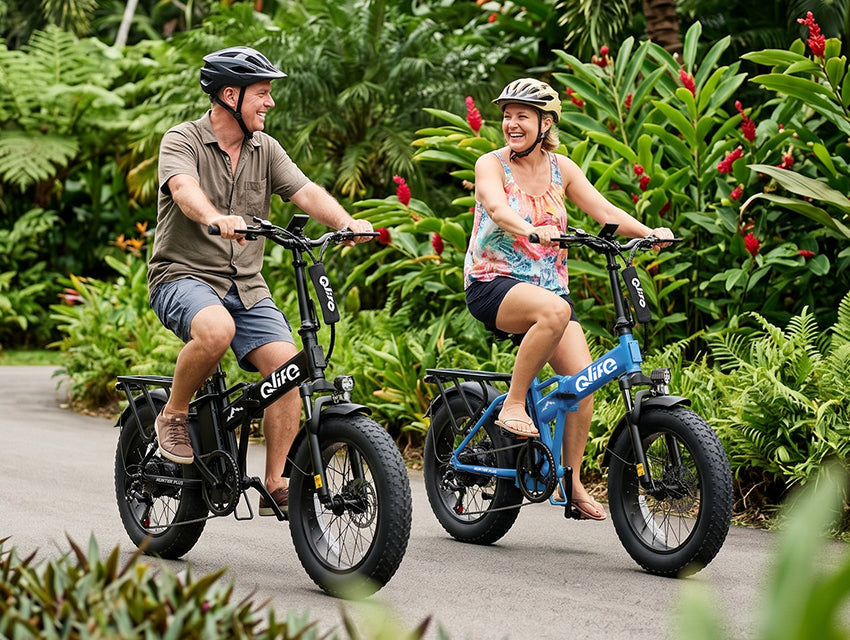
More is not always better. Choosing a full-suspension e-bike might feel like a serious upgrade. After all, it can offer greater comfort, improved traction and more capability on rough terrain. However, it also adds weight and complexity to an already heavy bike.
If you mainly ride to and from work on flat, well-maintained roads, you may not notice much benefit from rear suspension. A front suspension fork may provide all the cushioning you need. However, if you regularly tackle broken pavement, gravel, or uneven terrain, or if comfort is a major priority, a rear shock can make the ride noticeably smoother and reduce the vibrations that become tiring over longer distances.
With a budget of $1,200 or less, you have plenty of options. Many e-bikes in this price range include full suspension, but that extra comfort may come at the expense of weight, efficiency, or component quality elsewhere.
So, is a full-suspension e-bike genuinely worth it, or would a simpler hardtail be the smarter choice? Find out below.
Full Suspension Is Worth It When Your Route Earns It
A full suspension system is worth the investment if you use it regularly. That could mean your ride to work is filled with potholes, involves a stint on gravel, or the vibrations leave you feeling tired. Or it could mean your ride to work is smooth, but you want the option to hit the trail on the weekend.
Here’s a quick overview of when full suspension is a good idea:
|
Rider or route |
Verdict |
Why |
|
Broken pavement every day |
Worth considering |
Reduces repeated front and rear impacts |
|
Gravel and mixed terrain |
Usually worthwhile |
Improves comfort and wheel contact |
|
Long comfort-focused rides |
Often worthwhile |
Can reduce vibration fatigue |
|
Smooth five-mile commute |
Probably overkill |
Rear suspension may add little practical value |
|
Bike carried upstairs |
Often overkill |
Added weight becomes a daily disadvantage |
|
Simple, low-maintenance ownership |
Hardtail may be better |
Fewer pivots and suspension components |
|
Heavier rider |
Depends on setup |
Payload rating and spring suitability matter |
What “Full Suspension” Actually Means
A full suspension e-bike has two defining features:
- Front suspension fork: Allows the front wheel to move over bumps, reducing impacts through the handlebars and improving front-wheel control.
- Rear shock: Allows the rear wheel and frame to absorb impacts, creating a smoother ride and reducing vibration through the saddle.
Most e-bikes only have the front suspension fork. They’re known as a hard tail or front suspension system. Some bikes have no suspension at all — a rigid e-bike.
Fat tires can offer some of the benefits of a full suspension system. The wider tire provides greater bounce, reducing vibration and improving traction.
Not all e-bikes under $1,200 have a full suspension system. Some opt for fat tires; others are primarily road bikes. Nor does the price tag guarantee a good quality system. What matters most is suspension travel, spring type, adjustability, damping, frame linkage, and ride setup.
Where Rear Suspension Makes a Noticeable Difference
The only addition in a full suspension system is the rear shock. It aims to stop the back wheel bouncing or transmitting vibration through the frame.
Here are the benefits:
- Less impact through the saddle: The rear wheel can move over bumps instead of transferring the full impact into the rider and frame.
- Reduced vibration fatigue: Repeated cracks and rough surfaces can feel less punishing over a longer ride.
- Better wheel contact: Suspension can help the tires follow uneven ground rather than repeatedly bouncing away from it.
- More composed handling: The bike may feel calmer through potholes, gravel, and broken pavement.
- Greater confidence: Riders may feel less inclined to tense up or avoid every small imperfection.
- Mixed-terrain flexibility: One bike can feel more comfortable moving between roads, gravel, and hard-packed dirt.
Rear suspension may also improve comfort for a heavier rider. However, the suspension must be adjusted correctly, and the combined rider and cargo weight must remain within the bike’s payload limit.
The Racer Ultra is a good example of a balanced full suspension system. The advanced soft-tail design actively absorbs impacts and minimizes vibrations, handling everything from cobblestone streets to light off-road trails. However, the bike opts for 27.5 x 2.1-inch tires rather than oversized fat tires to preserve battery life and reduce the bike’s overall weight.
The Smoother Ride Comes With Extra Baggage
You might think a full suspension system is all upsides. But there are a few downsides to consider. First, the rear shock, pivots, and reinforced frame structure add significant weight. That can make it much harder to pedal and reduce battery efficiency. Not the best idea if you’re aiming to maximize range.
The other problem is complexity. Rear shock systems provide another feature that can break. You may have to replace parts, make repairs, or deal with issues if it stops working.
Plus, when you spend a limited budget on a full suspension system, you’re not spending it elsewhere. If you’re aiming to get an e-bike for under $1,200, you could spend that money on a better battery, brakes, or motor.
Full Suspension, Fat Tires, or a Hardtail?
When it comes to comfort and traction, you’ve got three main options: hardtail, fat tires, or full suspension. You can also stack fat tires and full suspension onto the same e-bike.
But how do they compare? Here’s a quick analysis:
|
Setup |
Best for |
Main benefit |
Main drawback |
|
Hardtail |
Pavement and moderate trails |
Simpler, lighter and more efficient |
Rigid rear transfers more impact |
|
Fat tires |
Loose ground and small surface imperfections |
Grip, stability and air cushioning |
Weight and rolling resistance |
|
Full suspension |
Repeated bumps and rough terrain |
Front and rear impact absorption |
Complexity, weight and maintenance |
|
Full suspension plus fat tires |
Maximum comfort and mixed terrain |
Cushioning, grip and frame movement |
Heaviest and least efficient option |
Match the Suspension to the Surface You Actually Ride
The best way to think about a full suspension system is to stop thinking about the bike itself and start thinking about the surface it’s riding on. That’s where the suspension makes the biggest difference.
Broken City Roads
Just because you’re only riding in the city doesn’t mean you don’t need full suspension. Repeated impacts from cracks, utility covers, and potholes can make riding a hardtail impossible.
Gravel and Hard-Packed Dirt
Rear suspension can improve comfort and control where the surface changes constantly. Tire tread and pressure remain equally important.
Longer-Mixed Terrain Rides
This is one of the strongest arguments for full suspension because repeated vibration becomes more noticeable over time.
Smooth Commuting
If your average commute is all plain sailing, you probably don’t need full suspension.
Recreational Trails
This depends on the trails. If it’s a bit of light, nontechnical riding, you can probably get away without full suspension. For anything more technical, it’s probably best to upgrade. Just remember that a budget full suspension e-bike isn’t designed for jumps, drops, or aggressive descending.
Heavier Loads
There’s one exception to only considering the surface. Additional weight increases the demands placed on the suspension, brakes, and frame. Check maximum payload and suspension suitability rather than assuming rear suspension automatically solves the problem.
The Suspension Label Is Only the Beginning
The suspension isn’t the only factor that determines comfort, traction, and control. Nor should you take the label at face value. To truly understand how a suspension system performs, you need to consider the e-bike as a whole.
Ask these questions:
|
Specification |
Why it matters |
Questions to ask |
|
Front and rear design |
Confirms it is genuinely full suspension |
Is there a functioning rear shock? |
|
Adjustability |
Helps match the setup to the rider |
Can preload or damping be changed? |
|
Travel |
Indicates available movement |
Is the figure clearly stated? |
|
Tire size |
Affects grip, cushioning and efficiency |
Does it suit the regular surface? |
|
Bike weight |
Affects handling and portability |
Can I lift and store it? |
|
Payload limit |
Covers rider and cargo |
Is there enough reserve? |
|
Brakes |
Must control the complete bike |
Do they suit its weight and speed? |
|
Parts support |
Suspension components eventually wear |
Are replacement parts available? |
Three Levels of Full-Suspension E-Bike Under $1,200
Not every full-suspension e-bike is trying to do the same job.
Racer Ultra is the sensible entry point. It has the familiar shape of a mountain bike, 27.5 × 2.1-inch tires, and enough suspension to take the sting out of broken roads and light trails. The 48V 10.4Ah battery and 1200W peak motor keep things capable without turning the bike into a huge fat-tire machine.
 Racer Plus Fat Tire 2.0 leans harder into comfort. Its 26 × 4-inch tires and full suspension give it more cushioning and traction, while the larger battery makes it better suited to longer, rougher rides. The trade-off is extra size, weight and rolling resistance. Battery capacity can vary by color, so check the exact version before buying.
 Racer Max is the serious option. Dual motors, full suspension and hydraulic brakes make it far more performance-focused, but also heavier and more demanding. Its advertised speed may also place it outside ordinary low-speed e-bike rules, so check where you can legally ride it.
 When the Simpler Bike Is the Better Bike
Full suspension bikes introduce a lot of complexity. If you’re on a limited budget (say under $1,200) and you don’t routinely deal with difficult terrain or uneven roads, it’s worth spending your money on other features.
Even if comfort is a priority, a full suspension e-bike isn’t always the answer. Choosing a softer tire pressure, a wider saddle, ergonomic grips, or a suspension seatpost can also make a difference. These alternatives are not identical to rear suspension but may solve ordinary commuting discomfort with less weight and complexity.
Buy Suspension for Your Route, Not the Product Page
Full suspension can make a rough route feel calmer, smoother and far less punishing. But there is no prize for carrying around extra weight and complexity on roads that never demand it.
Choose the bike for the potholes, gravel and broken ground you genuinely face, not the adventures suggested by the product photos. Explore Qlife’s full-suspension e-bikes under $1,200 and find the setup that earns its place on your ride.
FAQs About Full-Suspension E-Bikes
Is Full Suspension Worth It on an E-Bike?
It can be in the right conditions. Full suspension is designed for recurring rough surfaces, longer rides, or a focus on comfort. For smooth, flat roads, it may offer little benefit.
Is Full Suspension Worth It Under $1,200?
Price alone does not determine whether full suspension is worthwhile. More expensive systems may offer better damping, adjustability, durability and overall refinement. A full suspension e-bike under $1,200 can handle most light off-road trails, but it’s not designed for jumps or drops.
Is Full Suspension Better Than Fat Tires?
Not necessarily. Fat tires cushion smaller bumps and improve traction, while full suspension absorbs larger impacts through the frame. For rough trails, full suspension usually offers more control. For broken roads, gravel, or sand, fat tires may provide enough comfort with less mechanical complexity.
Does Suspension Reduce E-Bike Range?
The added weight from the suspension system can reduce range in certain situations.
Are Full-Suspension E-Bikes Heavier?
Generally yes, because the rear shock and supporting frame structure add components. However, the exact differences vary by model.
Do Full-Suspension E-Bikes Need More Maintenance?
The added complexity of the pivots, bearings, and shocks requires inspection and may eventually need servicing or replacement.
Is Full Suspension Good for Commuting?
It can be useful on damaged roads or mixed surfaces but unnecessary on smooth, short routes.
Is Full Suspension Good for Heavier Riders?
Yes, it’s a good option for heavier riders, improving overall comfort. However, the rider must still check payload capacity and suspension limits.
Should I Choose Full Suspension or a Hardtail?
Choose a full-suspension e-bike for rougher routes or a hardtail for lower weight, greater efficiency and simpler maintenance.
Can I Ride a Full-Suspension E-Bike on Trails?
Yes, provided the trail permits your e-bike. Suspension type does not determine access, but local rules, land-management policies and the bike’s legal classification may restrict where it can be ridden.
Share:
Class 2 vs Class 3 Electric Bikes: Speed, Throttle, and State-Law Basics
Best Fat Tire Electric Bikes Under $1,200 for City, Gravel, Beach, and Snow