
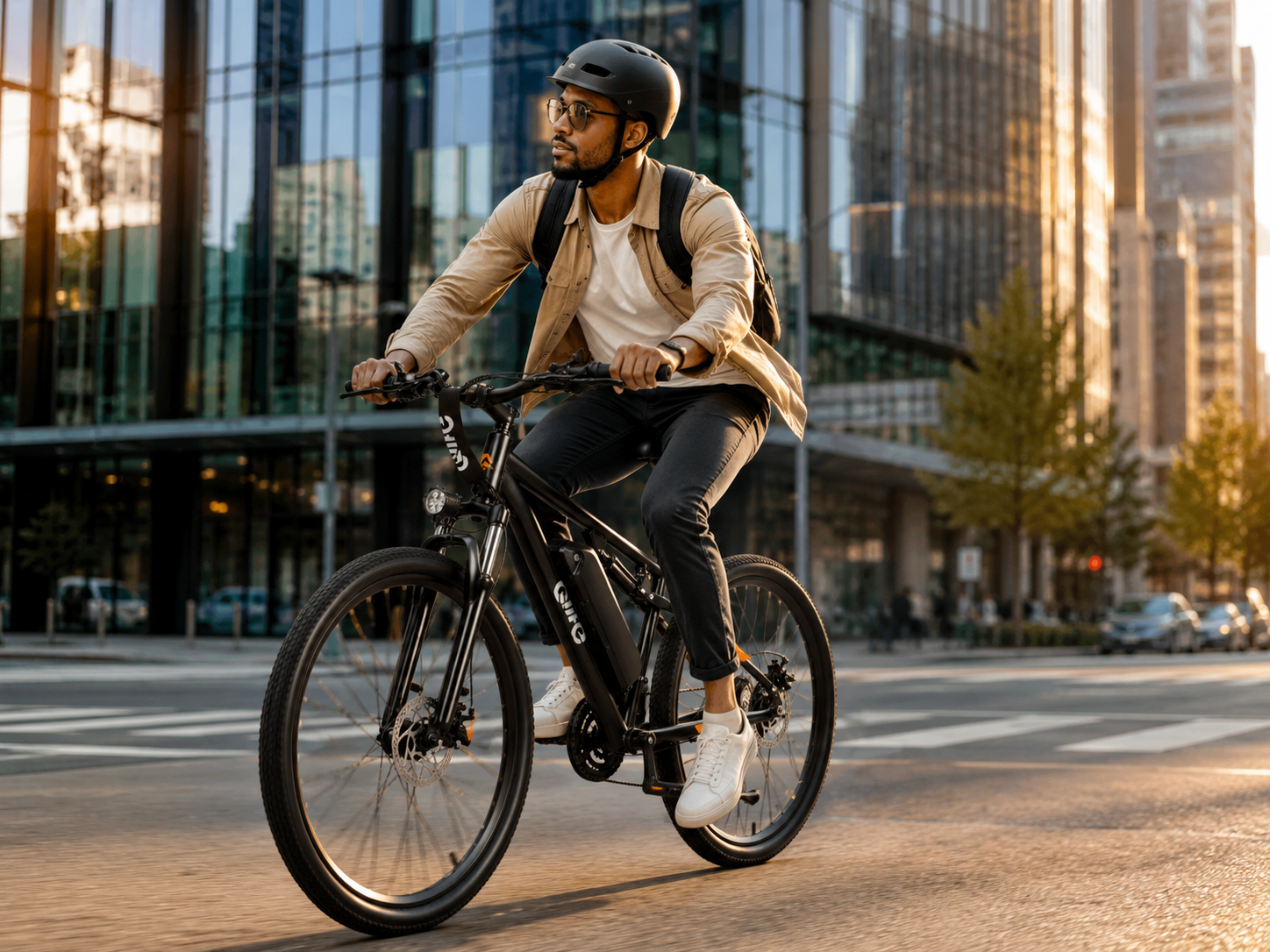
In the US, e-bikes are broadly grouped into three classes based on how the motor operates and the speed at which assistance stops. E-bikes can sit outside these classifications but are often subject to stricter laws.
One of the big questions riders ask when buying an e-bike is whether to prioritize a throttle capped at a lower assisted speed or faster pedal assistance for a longer commute.
Under the common three-class system, Class 2 e-bikes can use a throttle and stop providing assistance at 20 mph. Class 3 e-bikes generally provide pedal assistance up to 28 mph. However, class definitions and riding permissions vary, so always check state, city, and route-specific rules.
Class 2 vs Class 3 in 30 Seconds
If you’re not familiar with the class system, it can be a little confusing. The main things you want to pay attention to are the top speed and throttle. Generally, if it has a throttle, it is always classed as Class 2 — although some e-bikes can have a throttle and have a top speed higher than 20 mph, sitting outside the system.
Here’s a quick overview of the three classes:
|
Feature |
Class 1 |
Class 2 |
Class 3 |
|
Motor activation |
Pedaling only |
Pedaling or throttle |
Pedaling only under the standard definition |
|
Assisted-speed cutoff |
20 mph |
20 mph |
28 mph |
|
Throttle |
No |
Yes |
Generally no |
|
Best for |
Casual riding and broad route access |
Stop-start trips and easy starts |
Longer, faster road commuting |
|
Main trade-off |
No throttle |
More route restrictions in some areas |
More access and equipment restrictions |
|
What to verify |
Path and trail access |
Throttle permissions |
Age, helmet, equipment and path rules |
Not all states in the US use the three-class system. At present, 26 states use the system, while other states use different definitions or vehicle categories. You can check how your state classifies e-bikes on the NCSL website.
Why the Classes Matter Once You Leave the Driveway
The class system is a useful way for lawmakers and land managers to distinguish between e-bikes. While it can be frustrating at times, it serves a practical purpose. No one wants to blur the line between e-bikes, mopeds, and motorcycles. After all, you can’t safely ride a motorcycle on a bike path.
You’ll need to understand the class system if your state uses it. It can affect access to:
- Public roads
- Bike lanes
- Shared-use paths
- Sidewalks
- Parks and trails
- Campuses
- Private trail systems
Unfortunately, there’s no universal set of rules. Just because a state uses the three-class system doesn’t mean it has identical access rules everywhere. A state may recognize a class but still allow cities, counties, campuses, or park authorities to impose narrower rules.
There are upsides and downsides to both categories. Here’s how it affects real-world use:
|
Rider need |
Class 2 advantage |
Class 3 advantage |
Main question to check |
|
Stop-start commute |
Easier throttle-assisted starts |
Faster travel between stops |
Is throttle use allowed? |
|
Long road commute |
Lower assisted speed |
Assistance up to 28 mph |
Is Class 3 permitted on the route? |
|
Shared-use paths |
May be allowed in more places |
Often faces greater restrictions |
What does the path operator permit? |
|
Beginner rider |
Less need to pedal from a stop |
Higher cruising potential |
Is the rider comfortable with the speed? |
|
Campus riding |
Convenient for short trips |
May offer little practical benefit |
What are the campus rules? |
|
Mixed road and trail use |
Useful where Class 2 is permitted |
Road-focused but potentially restricted |
Which class has access to every section? |
Class 2 Gives You a Throttle at Lower Assisted Speeds
Class 2 e-bikes give you the advantage of a throttle. Most e-bikes rely on pedal assist, providing power relative to how fast or hard you pedal. Throttle functions more like a moped or motorcycle, delivering power independently of the pedals.
Under the common framework, Class 2 e-bikes are capped at 20 mph. The motor will stop assisting at this speed. While they also have a throttle, these e-bikes also feature pedal assistance.
Best suited to:
- Stop-start urban journeys
- Errands with frequent junctions
- Riders who appreciate help getting moving
- Beginners building confidence
- Riders who occasionally want a break from pedaling
One downside is range. Constantly using the throttle will consume battery capacity more quickly. Some trails and shared-use paths can also restrict the e-bike to pedal assist only.
Class 3 Trades Throttle Simplicity for Faster Pedal Assist
Class 3 e-bikes do not have a throttle under the common three-class framework. They rely on pedal assistance, which continues up to 28 mph. This makes them particularly well suited to faster commuting.
Best suited to:
- Longer road commutes
- Riders covering greater distances
- Experienced cyclists comfortable at higher speeds
- Routes with suitable bike lanes or road access
- Buyers seeking an alternative to short car journeys
Because of their higher assisted speed, Class 3 e-bikes are often more restricted on shared paths and recreational trails. Faster riding also places greater demands on the brakes, tires and rider control. Always wear a helmet and appropriate safety equipment, as crashes at higher speeds can cause serious injury.
You may be able to limit the assistance to 20 mph where higher speeds are unnecessary. However, this does not automatically turn the bike into a Class 1 model. Its throttle configuration, motor output, labeling, and original design may still affect its legal classification. Local definitions also vary, with some jurisdictions placing faster bikes in a different vehicle category.
A Throttle Does Not Settle the Legal Question
You might think the classification isn’t so complicated: if it’s got a throttle and goes up to 20 mph, it’s a Class 2 e-bike. Simple!
Except, some e-bikes are sold with a throttle that operates up to 20 mph and pedal assistance that continues to 28 mph. So, is it Class 2 or Class 3?
Such a bike may be described commercially as:
- Class 2 and Class 3 capable
- Configurable
- Multi-class
- Class 3 with a limited throttle
The problem is that marketing language does not determine the legal category. The state definition, factory configuration, labeling, and enabled settings all matter.
But can’t you just adjust the settings? Surely if you capped the throttle at 20 mph and the pedal assist at 28 mph, it works within the law. Well, not quite. Changing a setting may not change the legal classification.
Some Fast E-Bikes Sit Outside the Three-Class System
Things can get really confused when we consider e-bikes that don’t sit neatly in any category. Where does an e-bike that can hit 35 mph sit? Or a throttle that can accelerate past 20 mph?
Such e-bikes are quite common on the market. Indeed, several Qlife models have performance settings that exceed the speed or power limits used in conventional three-class definitions.
A model may fall outside the conventional three-class framework if it:
- Provides motor assistance beyond 28 mph
- Uses throttle power beyond the permitted cutoff
- Exceeds the relevant state motor-output limit
- Lacks required labeling or equipment
- Is categorized locally as a moped, motorized bicycle, or another vehicle type
Some people call this “Class 4”; however, that’s not a legal classification. In fact, some of these e-bikes might not be considered e-bikes at all.
The federal CPSC consumer-product definition covers a two- or three-wheeled bicycle with operable pedals, a motor below 750W, and a motor-only speed below 20 mph under specified test conditions. That definition governs federal product treatment, not complete road permission.
Check the Route, Not Just the State
You can’t just check the rules for your state and hope for the best. Each local jurisdiction can have its own rules regarding bike paths, road usage, campus, and much more.
You should always check:
|
Check |
What to confirm |
|
State definition |
How the bike is classified |
|
Assisted speed |
Where motor assistance stops |
|
Throttle |
Whether it is present and where it cuts off |
|
Route access |
Roads, lanes, paths and trails |
|
Local rules |
City, county, campus or park restrictions |
|
Rider requirements |
Age and helmet rules |
|
Bike equipment |
Label, speedometer, lights and reflectors |
|
Higher-speed status |
Whether licensing or registration may apply |
Choose the Class That Fits Your Actual Commute
So, which class should you choose? Here’s a quick way to choose:
Choose a Class 2 e-bike if your route involves frequent stops and you value the convenience of throttle-assisted starts. It is often the better fit for errands, shorter commutes, and riders who are happy traveling at typical bicycle speeds, provided throttle-equipped e-bikes are allowed on the routes they use.
Choose a Class 3 e-bike if you have a longer commute, spend more time on roads or suitable bike lanes, and are comfortable riding and braking at higher speeds. The extra assistance makes most sense when reaching 28 mph genuinely improves the journey rather than simply adding speed you rarely need.
Just remember, throttles and top speeds aren’t the only important factors. Rider experience, traffic conditions, battery capacity, bike weight, motor power, and much more determine whether an e-bike is suitable or not.
One thing to bear in mind: at higher top speeds, it’s worth investing in better brakes. It could make the difference between stopping too soon or too late.
The Right Class Is the One You Can Actually Use
There is no right or wrong class.
Class 2 offers the convenience of a throttle. It’s a great feature to have when you’re tired after a long day at work and don’t feel like pedaling. Class 3, on the other hand, goes much faster, getting you from A to B as quickly as possible.
Of course, neither advantage matters if the bike does not suit your route or local rules. Always double-check the specifications of any e-bike you buy compared to the rules in your local area.
Explore Qlife’s electric bikes and compare models built for the way you actually ride once you know which class fits your journey.
 FAQs About Class 2 and Class 3 Electric Bikes
What Is the Difference Between Class 2 and Class 3 E-Bikes?
Broadly, Class 2 e-bikes are defined as having a throttle and traveling up to 20 mph, whereas Class 3 e-bikes have only pedal assistance, which goes up to 28 mph.
Is a Throttle E-Bike Legal?
Under the common framework, a throttle e-bike may qualify as Class 2 if motor assistance stops at 20 mph. However, classification, legality and route access vary by state and locality.
Can a Class 3 E-Bike Have a Throttle?
Class 3 e-bikes do not have a throttle under the standard three-class definition. Some products combine a throttle limited to 20 mph with pedal assistance up to 28 mph, but their legal classification depends on the jurisdiction, configuration and labeling.
Can I Ride a Class 3 E-Bike on Bike Paths?
That depends on your local rules. There’s no universal set of restrictions. Each public route will have specific requirements decided by your local authority.
Are 28 MPH E-Bikes Legal Everywhere?
No. The bike may be lawful to own while still being restricted from particular public routes.
Do E-Bike Laws Vary by State?
Yes. While most states use the three-class system, other states have their state-specific rules. Even if a state uses the three-class system, local rules can apply to path access, helmets, age limits, licensing, and more.
Is Motor Wattage Part of E-Bike Law?
Yes, motor wattage appears in the federal definition and many state laws. However, it is only one part of the picture. Assisted speed, throttle operation, and local vehicle categories can also determine whether a bike is treated as an e-bike, moped, or another type of vehicle.
What Should I Check Before Riding a High-Speed E-Bike?
Check where the motor assistance stops, how the throttle operates, and what class appears on the bike’s label. Confirm these specifications are consistent with the local laws and regulations in your area.
Are E-Bikes Allowed on College Campuses?
That depends on the college. Campuses can set their own rules covering where e-bikes can be ridden, parked, stored, and charged.
Do I Need a Helmet for a Class 3 E-Bike?
Helmet requirements vary by state and may depend on the rider’s age and e-bike class. Class 3 riders face stricter helmet rules in many jurisdictions.
Share:
Electric Bike Under $800 vs $1,000 vs $1,200: What Budget Gets You?
Full-Suspension Electric Bikes Under $1,200: Worth It or Overkill?