
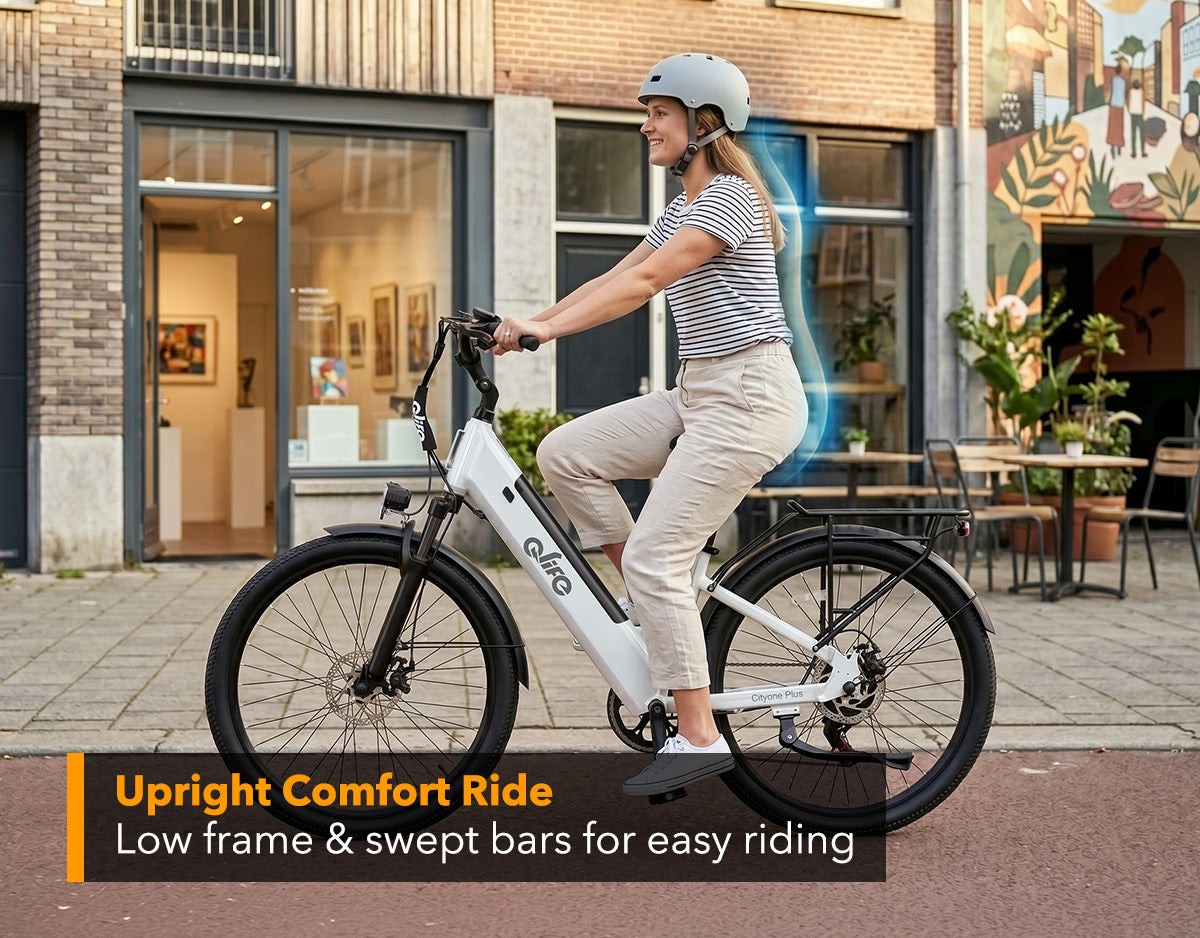
Most everyday e-bike journeys are not mountain climbs or long-distance marathons. They are short and practical. That could mean a five-mile commute to work, getting around campus, or running a few errands. For this kind of journey, an electric bike under $800 may be all you need.
You do not need an incredibly powerful motor or a battery that seems to last forever. You need a comfortable bike with enough range, carrying capacity, and practicality to get you from A to B.
But what exactly should you prioritize in an affordable commuter e-bike? Below, we cover the best electric bikes under $800 and help you decide which features matter most.
Quick Picks by Everyday Riding Need
Just because you’ve got a smaller budget doesn’t mean you can’t specialize. Different daily routines require different bike designs. Think about the road surface, distance, and how much you’ll need to carry.
Here’s a quick decision table to get you started:
|
Everyday need |
Type to consider |
Features to prioritize |
Qlife starting point |
|
Paved commuting |
City commuter |
Efficient tires, lights, comfortable geometry |
Cityone |
|
Beginner comfort |
Step-through commuter |
Low frame, upright position, easy mounting |
Cityone SO 2.0 |
|
Campus and apartment storage |
Folding e-bike |
Compact frame, manageable size, removable battery |
Hunter |
|
Errands and mixed surfaces |
Fat-tire e-bike |
Wider tires, rack compatibility, stable handling |
Racer Fat Tire 2.0 |
|
Comfort-focused urban riding |
Moped-style e-bike |
Padded seat, suspension, lighting |
Spark |
|
Stability and light cargo |
Electric trike |
Three-wheel stability, low-speed control, cargo space |
Triker 2.0 |
What Makes a Good Commuter E-Bike Under $800?
A good commuter e-bike under $800 is not designed for 70-mile journeys. It is not necessarily going to scramble up loose terrain or give you the most powerful motor. It might. But it does not have to.
The best commuter or campus e-bike is the one that handles your ordinary journeys reliably. It should be comfortable, convenient and have just enough power and range for what you need.
Look for:
- Enough range for the complete round trip. Include a reserve rather than relying on the advertised maximum.
- A comfortable riding position. Consider reach, saddle position, handlebar height and frame access.
- Predictable brakes. Daily stop-start riding makes control more important than raw speed.
- Tires matched to the route. Narrower tires suit smooth pavement, while wider tires help on broken or mixed surfaces.
- Useful everyday equipment. Lights, fenders, kickstands, and rack compatibility often matter more than another motor upgrade.
When browsing, it is easy to get taken in by the headline figures. Bigger is better, right? But when you are carrying a heavy e-bike upstairs or trying to maneuver a monster around tight city streets, you may wish you had chosen the smaller motor or battery.
How to Match the Bike to Your Route
Your e-bike is a practical tool, not the product photo. It’s got to do what you need it to. That comes down to two factors: where you ride and what you carry. Prioritize how you’ll actually use the e-bike day to day.
Flat City Streets
For urban riding, focus on efficient tires, comfort, lights, and predictable brakes. A step-through design is also a great option. It makes stop-start riding much more comfortable and convenient.
Hills and Bridges
Hills and bridges require a bit more motor power and sensible gearing. Opting for around 750W is sensible. Hills will also drain your battery, so it’s worth factoring that into your range calculations.
College Campuses
College campuses are all sharp turns, narrow spaces, and sometimes even different levels. You’re unlikely to hit maximum speed. Instead, maneuverability and compact storage are crucial. Folding designs may help, but they are not necessarily light.
Errands and Groceries
Bikes aren’t just about getting you from A to B. Sometimes, you’re carrying groceries and other belongings. Check rack compatibility, payload limits, and low-speed handling. Include the weight of bags in the calculation.
Mixed Pavement and Gravel
Even on a commute, riders can face difficult terrain. Fat tires and a good front suspension can substantially improve comfort and control, although they add weight and rolling resistance.
Best Under-$800 E-Bike Types for Commuting
The best commuter e-bike depends on the problem you need it to solve. Some riders want maximum efficiency. Others need easier mounting, compact storage, or more stability on rough ground. Qlife’s under-$800 range covers several distinct bike types.
City Commuter E-Bikes
Best for straightforward paved commuting: Cityone SO 2.0
 The Cityone is the no-drama option. It has the familiar shape and handling of a conventional bicycle, without the bulk of fat tires or the oversized presence of a moped-style frame.
That simplicity is its strength. On paved roads, bike lanes and predictable daily routes, a lighter city setup should feel easier to steer, pedal and live with. It is the Qlife model for riders who want to get to work without turning every commute into an expedition.
Step-Through Commuter E-Bikes
Best for easy mounting and stop-start riding: Cityone Plus ST

Find yourself getting annoyed by the top bar every time you stop? Or is it uncomfortable swinging your leg over when getting on? The Cityone Plus ST is easy to hop on and hop off. With a rear rack, you can use it to carry your bags as you head to work or ride around campus.
Plus, with a top speed of 28 mph, it’s not slow. The only problem is that as a Class 3 e-bike, it might be restricted on some bike paths.
Folding E-Bikes
Best for apartments and compact storage: Hunter

The Hunter folds because sometimes the real obstacle is not the journey. It is the hallway.
Its folding frame can help it fit into apartments, dorm rooms, car trunks, and crowded storage areas. Do not mistake folding for weightlessness, though. Check the complete weight before planning to carry it upstairs every day. The Hunter saves space. It does not remove gravity.
Fat-Tire E-Bikes
Best for broken pavement and mixed surfaces: Racer Fat Tire 2.0
 Fat tire e-bikes give you a more stable, planted feel. The Racer Fat Tire 2.0 is no exception. With 20x4.0” wheels, it has a robust silhouette, tackling gravel, potholes, or even light outdoor trails with ease.
It also has the advantage of looking cool when cycling on campus. Plus, with a 1,800W peak motor and plenty of battery power, it’s one of the most powerful e-bike options for under $800.
Moped-Style E-Bikes
Best for relaxed urban comfort: Spark
 The Spark does not pretend to be a traditional commuter bicycle. It sits lower, looks bolder, and places comfort at the center of the ride.
Its moped-style frame and padded seat suit riders who want to cruise through town rather than chase maximum pedaling efficiency. That comfort comes with bulk, so think carefully about storage, lifting, and local speed rules before buying.
Electric Trikes
Best for stability and everyday cargo: Triker 2.0
 Why settle for two wheels when you can have the stability of three? The Triker 2.0 is the strongest starting point for riders who prioritize low-speed stability, groceries, and short local errands.
The front basket and rear rack give you plenty of space to carry belongings, while the seat and backrest are about as comfortable as it gets. It is perfect for picking up groceries or carrying a heavier load to work.
Range Planning for Daily Commutes and Errands
If you’re commuting or ticking errands off your list, range is a big factor when choosing an e-bike. You want to get there and back without running out of charge. No one wants to find themselves stuck at the side of the road, especially with ice cream in their shopping bags.
The advertised range is generally a best-case scenario. It often assumes a moderate rider weight, flat and even ground, and minimal cargo.
In real-world conditions, you might use a higher assist level, travel uphill or against the wind, or load the bike with your work gear or groceries.
The answer is to calculate the distance of your average trip and add a comfortable buffer, usually around 40%. For example, an eight-mile daily round trip with a 40% reserve requires planning for roughly 11–12 miles of dependable range.
|
Daily round trip |
Minimum distance with 40% buffer |
|
5 miles |
7 miles |
|
8 miles |
11.2 miles |
|
12 miles |
16.8 miles |
|
16 miles |
22.4 miles |
Safety and Security for Campus and Urban Riders
$800 might not be the highest-end e-bike. But it’s still a hefty investment that most people can’t afford to let be stolen. Security is a major factor for both campus and urban riders.
Follow these tips:
- Lock the frame to a fixed object using a high-quality lock.
- Consider a second lock for the wheel.
- Remove the battery or display where practical.
- Avoid leaving the bike in isolated locations overnight.
Safety is another factor. Wear visible clothing and ride predictably. Check brakes, tires, and lights regularly to ensure everything is working when you need it most.
Commuter Feature Checklist Under $800
There’s no set checklist for commuters. No two commutes are exactly the same. If you’re only traveling a few miles on even roads, you can opt for a simple step-through frame, narrow tires, and a lightweight design. If you’re a heavier rider or tackle hills, you’re going to want more motor power. The same is true for heavy cargo.
- Battery and motor: Enough range for the full trip, with suitable support for hills and rider weight.
- Brakes and tires: Predictable stopping and tires matched to pavement, gravel or broken roads.
- Comfort and fit: Check the saddle, reach, handlebar position and frame access.
- Practical equipment: Prioritize lights, fenders, a kickstand and rack compatibility.
- Portability and support: Make sure the bike fits your storage space and comes with a reliable warranty and parts support.
You’ll also need to factor accessories into your pricing. If you spend all your budget on an e-bike, you might not have enough left over for the essentials.
|
Accessory |
Why it matters |
Priority |
|
High-quality lock |
Protects the frame during daily stops |
Essential |
|
Helmet |
Reduces injury risk |
Essential |
|
Rear rack or bag |
Carries work items or groceries |
High |
|
Fenders |
Keeps road spray off the rider |
High |
|
Reflective gear |
Improves visibility |
High |
|
Phone mount |
Helps with navigation |
Optional |
When to Spend More Than $800
$800 is a strong budget for an affordable commuter e-bike. You can get an excellent model for less. However, if you need a specific feature, whether that is extra range, better suspension, or a more powerful motor, it may be worth spending a little more.
Do not pay for features you will never use. A higher budget may be justified when:
- The daily route is long.
- Steep hills are unavoidable.
- The rider carries heavy cargo.
- Hydraulic brakes are a priority.
- A larger battery is needed.
- Full suspension or greater comfort is important.
- The bike will replace a car for frequent travel.
For most everyday journeys, Qlife’s electric bikes under $800 provide plenty of practical choice. Explore the range and compare each model by route, comfort, storage and the features you will actually use.
FAQs About Electric Bikes Under $800
Is an Electric Bike Under $800 Good for Commuting?
An under-$800 electric bike can be suitable for short or moderate routes when range, fit, and equipment match the journey.
How Much Range Do I Need for a Daily Commute?
Calculate the full round trip and add at least 30-40% reserve. This ensures you’ve got enough extra battery power to cover hills, cold temperatures, wind, or any other battery-draining factor.
Are Folding E-Bikes Good for College Students?
They can be. Folding e-bikes take up less space, but they’re not always as lightweight or easy to carry as many assume. Check campus rules before storing or charging one indoors, as some colleges prohibit e-bikes in classrooms or dorms.
Are Fat Tires Good for City Commuting?
Fat tires offer greater comfort and stability. That’s great for loose or uneven terrain. However, the added weight and greater rolling resistance can add drag and drain the battery quicker.
What Accessories Should I Buy First?
Prioritize a lock, helmet, lights, and a practical way to carry belongings.
Can I Ride an E-Bike on Campus?
That depends on the individual campus policy and local e-bike rules. Campus restrictions vary, and some prohibit e-bikes entirely or limit where particular classes can be ridden. Check whether your e-bike’s specifications fit within the rules.
How Do I Keep an E-Bike Secure?
Use a high-quality lock to secure the frame to a fixed object and consider adding a second lock for the wheels. Remove the battery or display when practical and avoid leaving the bike in isolated locations overnight.
Should I Choose a Step-Through Frame?
A step-through frame is a great option for frequent stops, easier mounting, and a more accessible riding position.
Share:
Best Fat Tire Electric Bikes Under $1,200 for City, Gravel, Beach, and Snow
Fat Tire Ebike Tire Pressure by Terrain and Rider Weight