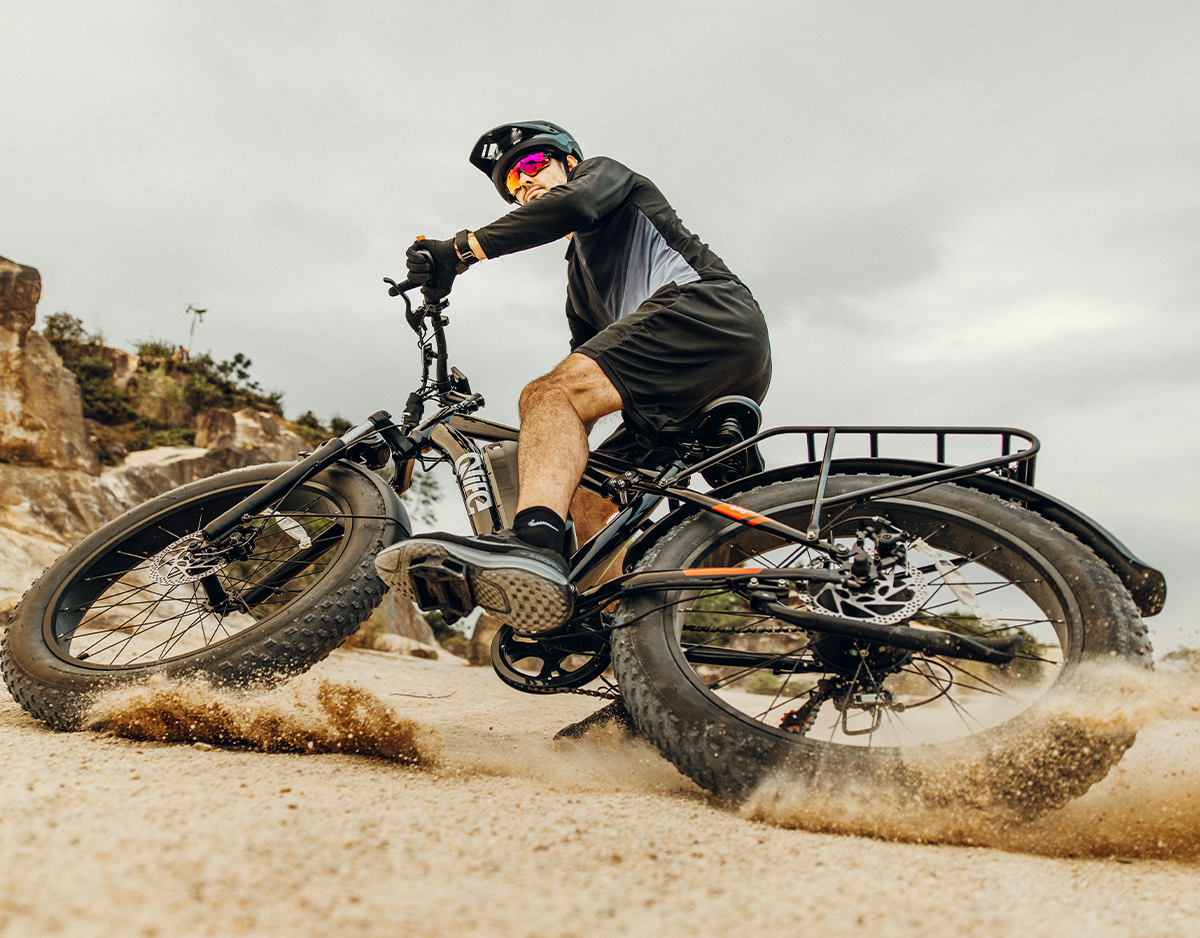
Fat tire e-bikes can go places where regular electric bikes can't. They also make riding easier and more enjoyable for some riders, as the motor takes the effort out of longer rides. And on top of this, they look great, too. Fat tire electric bikes are becoming more popular, so more options are now available from several manufacturers at very different price points and spec levels, and buying the wrong one is easy if you don't know what you're looking at. The specs that matter most on a fat tire e-bike are also different from those of a regular commuter, so it's worth understanding what to focus on before you start comparing models.
This guide covers the key things to check before buying a fat-tire e-bike and which Qlife models you should consider for different budgets.
 What Is a Fat Tire E-Bike?
A fat tire e-bike is an electric bike fitted with oversized tires, usually 3.5 to 5 inches wide. Standard e-bike tires are around 1.75 to 2.5 inches wide. That extra width gives you a larger contact patch with the ground, which improves traction on loose, soft, or uneven surfaces.
This means you can ride a fat tire e-bike on terrain that would be difficult or impossible on a regular bike. Sand, snow, mud, gravel, loose dirt, and rough trails all become more manageable. That's why they're popular with riders who live near the coast, in snowy areas, or who want a single bike that works on and off-road.
Tire Size: 20-Inch vs 26-Inch
The most common sizes you'll see are 20x4.0-inch and 26x4.0-inch. The first number is the wheel diameter, and the second is the tire width.
The 20-inch wheel is more compact, making the bike easier to handle at low speeds. It's a better fit for shorter riders, riders who want a more agile feel, or anyone using the bike for mixed road and light off-road use. The 26-inch wheel gives more ground clearance and feels more stable at higher speeds. If you're planning trail rides or longer adventures on varied terrain, the bigger wheel is worth having.
Both of Qlife's 20 and 26-inch wheeled fat bikes use 4.0-inch-wide tires, so the traction and grip advantage is the same. Which one suits you depends on your height and how you plan to ride.
One thing most buyers don't think about is tire pressure. On a fat tire bike, you can run as low as 5 PSI to give you more float on sand or snow, or up to around 15 PSI on roads to reduce rolling resistance. The ability to adjust your pressure to the terrain makes fat tire e-bikes versatile.
Motor Power and Torque
E-bike manufacturers indicate motor power as "peak output," and most fat-tire models range from 750W to 2000W. If you often ride mixed terrain, commute, and use lighter off-road terrain, 1000W to 1500W peak power would be more than enough.
You'll want more power on steep climbs and in conditions where the motor has to work hard, such as wet gravel, loose sand, or thick mud. A lower-powered motor might feel fine on flat roads and get overwhelmed on exactly the terrain a fat tire bike is supposed to handle.
Torque is worth paying attention to as well, and it often gets overlooked in favor of peak power. Torque, measured in Newton-meters, is what pulls you up a hill. A motor with 85Nm of torque will climb the same hill more confidently than a lower-torque motor at the same wattage. When comparing fat tire e-bikes, check the torque figure alongside the peak power.
You can also buy Dual-motor bikes, that have a motor on both wheels, giving you much more power and extra uphill scrambling ability. If you're planning serious off-road riding, a dual-motor bike is worth considering, but remember that two motors add weight, which can be a disadvantage in some uses.
Battery Capacity and Range
 Battery capacity is measured in watt-hours. To work it out, multiply the voltage by the amp-hours. So, a 48V 13Ah battery is 624Wh. A 48V 15.6Ah is 749Wh. A 52V 20Ah is 1040Wh. More watt-hours means more range, but also more weight, so it's worth choosing the battery size based on the rides you plan to do.
Electric bike manufacturers always measure range under ideal conditions. So they use a light rider on flat terrain with a low assistance level, which gives them a high range. But in the real world, it's very rare to get these optimum conditions, as we often ride on varied terrain with moderate assist and a normal-weight rider. So expect around 60-75% of the claimed manufacturer's range figure. A bike claiming 65 miles will typically give you 40 to 50 miles in practice. That's still more than enough for most rides, but it's worth knowing before you buy.
For days out, beach trips, or loops within 30 miles of home, a battery ranging between 500-750Wh is plenty for most people. If you typically ride long distances or don't want to worry about battery level, choose a model with a larger battery, or buy an extra one to replace your current one when it runs out. Most Qlife fat tire e-bikes have removable batteries, so you can charge them without bringing the bike inside.
Suspension
 Another reason people love fat tire e-bikes so much is that they are comfortable to ride. Fat tires provide a lot of cushioning due to their volume and lower air pressure. For road use, gravel paths, and lighter off-road riding, that cushioning gives you a plush ride, especially when the bike also has suspension.
For more demanding terrain, full suspension makes a noticeable difference. A full suspension fat tire e-bike has shock absorbers front and rear, which absorb bigger impacts that even fat tires can't fully deal with. On rocky trails or rough gravel roads, the difference between front-only and full suspension becomes obvious after about 30 minutes.
The issue with full suspension is that it adds weight, cost, and more components that will eventually need maintenance. For riders whose routes are mostly on roads and hard-packed paths, with occasional light gravel, front suspension is the simpler, more sensible choice.
Brakes
Fat tire electric bikes can reach high speeds, and with their extra weight, those speeds need to be kept in check. Mechanical disc brakes are reliable and do the job in most conditions. They're also easier to service yourself if a pad needs to be replaced. Hydraulic disc brakes give you more stopping power with less hand effort and perform better in wet or muddy conditions.
If you're riding at higher speeds, in wet weather regularly, or on demanding trails, hydraulic brakes are worth having. The Qlife Racer Max comes with hydraulic disc brakes front and rear as standard. The Racer and Racer Plus use mechanical disc brakes, which are adequate for the type of riding most buyers will do on those models.
Frame and Fit
You can buy fat-tire e-bikes with step-over and step-through frames. Step-over frames are the more traditional style, and are stiffer, which is better if you want a higher-performing e-bike. Step-through frames are easier to get on and off, which is more convenient on rides where you're stopping frequently.
Before buying, check the minimum seat height against your inseam. Fat tire bikes can sit taller than standard e-bikes because of the larger tire diameter, so confirming the fit from the actual spec sheet is worth doing, not just going off the general size range. Getting this wrong is a common mistake, and it's much harder to fix once the bike has arrived.
Which Qlife Fat Tire E-Bike Is Right for You?
Qlife's fat tire e-bike range covers entry-level all-terrain use right through to high-powered dual motor performance.
 For most riders, the Qlife Racer Fat Tire 2.0 at $659 is a good place to start. The 1500W peak motor, 48V 13Ah battery, and 35+ mph top speed give you more than enough performance for mixed terrain and beach riding. The fat tires handle sand, gravel, and road use well, and the removable battery means charging is simple. If you're buying your first fat tire e-bike and don't want to overspend, this is the right call.
 Riders who want a larger wheel and full suspension should look at the Racer Plus 26x4.0" Fat Tire 2.0 at $699. The 1800W peak motor with 85Nm of torque climbs hills noticeably better than the Racer, the 48V 15.6Ah battery gives up to 75 miles of range, and the full suspension system is the feature that makes the biggest difference if your riding includes rough terrain. The 26-inch wheel also feels planted and stable at higher speeds, unlike the 20-inch wheel. For trail riders and adventure riders, this is the better bike.
 The Racer Max Dual Motor at $1,099 is in a different class. The dual-motor system delivers 3000W peak, the 52V 20Ah battery delivers up to 60-70 miles of range, and front and rear hydraulic disc brakes give you the stopping power to match the performance. Full suspension, 26x4.0-inch fat tires, and a 37+ mph top speed. If you're hunting, exploring backcountry terrain, or riding conditions that test a standard fat tire e-bike, this is the one to look at.
Final Thoughts
The main things to get right are tire size, motor torque, battery capacity for your typical ride distance, and suspension for the terrain you'll be on most. Get those four right, and you'll end up with a bike you use all the time.
For most riders, the Racer Fat Tire 2.0 at $659 covers most use cases well. The Racer Plus is the better choice if you want more range and full suspension. The Racer Max is there for riders who need maximum capability and are willing to pay for it.
Browse the full Qlife fat tire e-bike range to find the right model for your riding.
FAQ
What is the difference between a 20-inch and a 26-inch fat tire e-bike? The 20-inch wheel is more compact and easier to handle, making it a better fit for shorter riders and mixed urban and off-road use. The 26-inch wheel is more stable at speed and gives more ground clearance for trail riding and longer off-road rides. Both use 4.0-inch wide tires on Qlife models, so traction is comparable.
How much motor power do I need? For most riders on mixed terrain, 1000W to 1500W peak is plenty. If you're climbing steep hills regularly, carrying extra weight, or riding on loose terrain like sand or snow, a higher-powered motor and more torque make a real difference. The Racer Max's dual motor system is the pick for serious off-road riding.
Do fat tires really make a difference on sand and snow? Yes. The wide contact area distributes weight over a larger surface, preventing the tire from sinking into soft ground. Running at low pressure, fat tires float over sand and snow in a way a standard tire can't. It's the main reason riders choose fat tire e-bikes for beach and winter use.
Is full suspension necessary? Not for all riding. Fat tires absorb a lot of vibration on their own, so for road use, gravel paths, and lighter trail riding, front suspension alone is adequate. For more demanding trails and longer off-road rides, full suspension makes a real difference to comfort and control.
How do I know if a fat tire e-bike will fit me? Check the minimum seat height and standover height against your inseam. Fat tire bikes can sit taller than standard e-bikes because of the larger tire diameter. The Qlife Racer models fit riders from around 5'2" upward, depending on the model and seat adjustment.
How far can a fat tire e-bike go on one charge? The Qlife Racer Fat Tire 2.0 claims up to 60 miles on pedal assist. The Racer Plus claims up to 75 miles. The Racer Max claims 60-70 miles. In real-world conditions with moderate assist, expect around 60-75% of those figures, depending on terrain, rider weight, and assist level.
Share:
What Is the Maximum Speed of Electric Bikes in the US?
Are 3-Wheel Electric Bikes Good for Seniors?