Most people think of electric mountain bikes as trail bikes. Get to the trail, ride the loop, go home. That's one way to use them, but it's not the only way, and for a lot of riders it's not even the most interesting way.
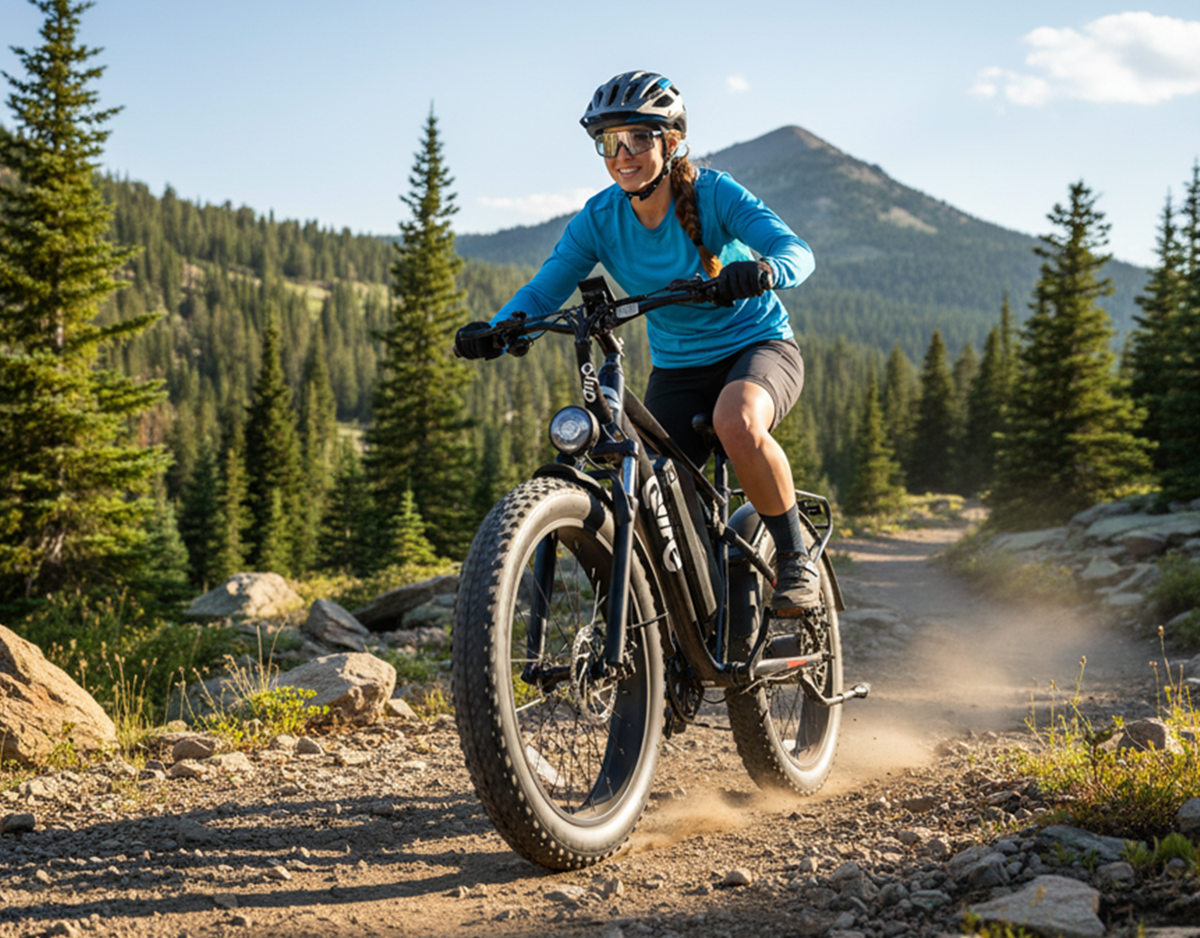
E-MTBs are capable machines that happen to work exceptionally well beyond the trail network. The combination of motor assistance, traction, long battery range, and load-carrying capacity opens up a range of uses that you can't do with regular mountain bikes. Bikepacking, hunting, backcountry exploring, and photography trips into remote locations. The e-MTB can do it all.
This guide covers three of the most compelling uses for an e-MTB away from the trail, and what to look for in a bike if any of these appeals to you.
Bikepacking on an E-MTB
Bikepacking is bicycle touring stripped back to its essentials. No panniers, no heavy racks. You carry everything in frame bags, handlebar rolls, and seat packs, and you go places that regular touring bikes can't reach. Dirt roads, gravel tracks, remote trails, mountain passes.
The e-MTB significantly changes what's possible in bikepacking. The motor's help makes climbing while fully loaded much easier, and the extended range lets you cover long distances between resupply points. A trip that would take five days on a regular loaded bike might take three.
Battery range is the main consideration for bikepacking. Most e-MTBs will cover 40-60 miles of mixed terrain on a single charge under normal conditions. With luggage on board, that range will drop. Riding efficiency, how hilly the route is, and how much you rely on the motor all affect how far you get per charge. On a multi-day trip, you need to plan your charging stops carefully.
Solar charging panels that can be mounted to bikepacking bags are a practical option for remote routes. They won't fully charge a battery, but they can add range over the course of a full day in the sun. Some bikepackers also carry a small power bank to top up the display and GPS, keeping the motor battery reserved for riding.
How much a fat-tire e-MTB can carry is a significant advantage over lighter trail bikes. They have heavier, stiffer frames that handle loaded riding better, and the wide tires provide greater stability. On rough or loose surfaces, that extra grip can be the difference between staying on two wheels and slipping out.
For multi-day bikepacking, look for an e-MTB with at least 600Wh of battery capacity, attachment points for frame bags, and a reliable drivetrain. The Qlife Racer Plus Fat Tire 2.0 is a good example. The 26x4.0-inch fat tires handle varied terrain well, and the larger battery gives you more range on loaded riding days.
Using an E-MTB for Hunting
 Hunting and electric bikes are a fantastic combination that more hunters are discovering every season. The motor lets you cover ground quietly and efficiently, reach locations that would be a long walk from the nearest road, and carry gear in and out without the noise and disruption of an ATV or truck.
Noise is one of the biggest advantages. An e-MTB is significantly quieter than any motorized vehicle, which matters when you're trying to move through the woods without alerting animals. At low speeds with moderate assist, the motor is barely audible. You can cover a mile of forest trail in the time it would take to walk a quarter of it, without the noise that walking sticks, boots on leaves, and heavy breathing tend to produce.
You can also access more areas with an e-MTB. Many hunting areas don't allow motorized vehicles, but still allow bicycles. An e-MTB gets you further into those areas faster than any other non-motorized option. That means you can reach spots that less mobile hunters can't, which is a meaningful competitive advantage.
Carrying capacity is a big thing for hunters. You need to get equipment in and game out. Fat tire e-MTBs handle this better than regular e-MTBs. The wide tires and stable geometry handle heavier loads, and a rear rack lets you bring more gear. Some hunters use a small trailer attached to the bike for carrying game, which works well on gravel and dirt roads.
There are a few practical considerations for hunters when it comes to the specs of their e-MTB. The first is to keep the battery charged for the return trip, particularly if you're carrying a significant load out. Mechanical disc brakes are serviceable in the field, but hydraulic brakes give you better stopping power on descents when you're riding with lots of weight and in variable conditions. And a bike with good mud clearance is worth considering if you're hunting in wet conditions.
 If you're a hunter who needs a lot of power and load-carrying capacity, the Racer Max Dual Motor is a good option. It has a dual motor system with a 3000W peak output and a 52V 20Ah battery, giving it serious range and climbing power. Also, the 26x4.0-inch fat tires handle rough, wet, and uneven terrain confidently. It's best to check local regulations before riding in hunting areas, as e-bike access rules vary by region.
Backcountry Exploring and Photography
Some of the best uses for an e-MTB have nothing to do with sport at all. Getting into remote locations for photography, wildlife watching, or simply exploring terrain that's too far to walk and too rough for a car is where e-MTBs come into their own.
Photographers, in particular, have found e-MTBs incredibly useful. Getting to a location for golden hour light used to mean either a very early start on foot or a compromise on where you could reach. An e-MTB lets you leave later, travel farther, and arrive without being out of breath. The motor means you're not too exhausted to set up carefully and wait for the right shot.
Wildlife watching benefits in much the same way as hunting. The quiet approach that an e-MTB allows means animals are less likely to be disturbed before you get into position. If you're watching birds, tracking deer movement, or looking for less common species in remote habitat, the low noise profile of an e-MTB is a significant advantage over any motorized alternative.
For exploring, the combination of fat tire grip and motor assistance makes a huge range of terrain accessible that would otherwise require a vehicle or significant fitness. Old logging roads, fire tracks, backcountry paths, and off-road routes that see very little traffic are all manageable on a capable e-MTB. The sense of self-sufficiency that comes from being able to cover 40 miles of mixed terrain on your own power, with a motor assist, is part of what makes this kind of riding so appealing.
For exploratory riding, you need good battery range and reliability. You don't want to be 20 miles from the nearest road with a flat battery. It's best to carry a basic repair kit, know how far your battery will take you on the terrain you're riding, and plan a return route that doesn't require more charge than you have.
The Racer Plus Fat Tire 2.0 has enough range and tire capability to handle most backcountry terrain. For more demanding exploration on rougher surfaces, the Racer Max has the power and range to go further and carry more.
What to Look for in an E-MTB for These Uses
The priorities change slightly depending on how you plan to use your electric mountain bike, but a few things are common with all three of these applications.
Battery capacity is the most important spec. For extended use away from charging infrastructure, 600Wh or above gives you a meaningful range. Larger is better for loaded riding and remote exploring.
Fat tires handle the varied terrain these uses typically involve better than standard mountain bike tires. The 26x4.0-inch tires on the Racer series are well-suited to gravel, dirt, mud, and rougher ground.
Load capacity is important for bikepacking and hunting. A frame that handles loaded riding well, with attachment points for bags or a rack, makes a significant practical difference
Motor power becomes more important when you're carrying weight. A higher-output motor under load performs better on climbs than a lower-powered one at the same weight.
Reliability over performance, for remote use. A bike that's straightforward to maintain in the field is worth more than one with marginally better performance but more complex components.
Final Thoughts
A mountain bike trail is just one place you can ride an e-MTB. For bikepackers, hunters, photographers, and explorers, these bikes open up access to terrain and experiences that would otherwise require a vehicle, significant fitness, or simply not be possible.
Qlife's electric mountain bike range includes plenty of models suitable for riding into the backcountry. The Racer Plus Fat Tire 2.0 is the strongest starting point for most riders. The Racer Max is the pick for anyone who needs maximum power and range for more demanding applications.
Share:
Decoding the e-MTB: A Beginner’s Guide to Motors, Range, and Trail Performance
Is an Electric Mountain Bike Good for Beginners?