
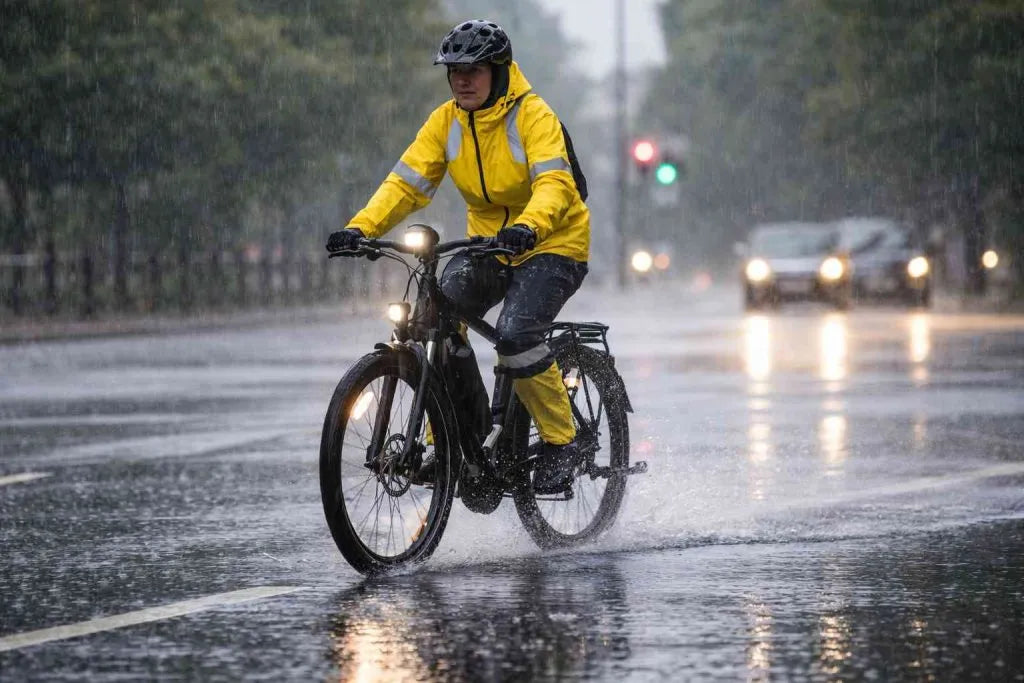
Electric bikes are designed to be ridden in most conditions. While mixing water and electricity is never ideal, most e-bikes can handle a bit of rain. But there are limits to how waterproof they are.
Generally, you can ride an e-bike like you would any other bike. That means riding in rain, sun, and shine. But there are a few factors to consider. Most manufacturers list the e-bike's water-resistance level in the specifications (look for the IP rating). It’ll help determine how much water the bike can withstand.
Below, we answer whether electric bikes can get wet, if it’s safe to ride an e-bike in the rain, and how to know if your e-bike is water-resistant.
Are Electric Bikes Waterproof or Water-Resistant?
We often use terms like waterproof and water-resistant interchangeably. However, there is a real difference — especially when talking about something like an e-bike.
Waterproof means an item is fully sealed. That’s rare for an e-bike, where submersion isn’t built into the design. More commonly, e-bikes are water-resistant, meaning they’re protected against splashes and rain — anything you might expect on the average bike ride.
There are levels of water resistance.
Manufacturers list the water-resistance level in the specification as an “IP rating.” Look for IP65, IP64, or IP54 (see below).
Can You Ride an E-Bike in the Rain?
Yes, e-bikes are designed for everyday weather.
It wouldn’t be much of a bike if you had to head indoors at the first sign of drizzle. Generally, e-bikes can withstand light to moderate rain, so in the majority of conditions, you’re fine. It’s also okay to ride on wet roads or puddles. A little splash is unlikely to cause any issues.
The only real risk is visibility and traction. Wet roads are slippery, and at the higher speeds e-bikes achieve, you can have a severe accident if the bike skids. It’s best to reduce speed in the rain, just to be safe.
What Happens If an E-bike Gets Wet?
Normal exposure (as explained) is absolutely fine. Rain or light splashing isn’t going to cause any issues as the electronics are sealed. However, if there is excess exposure — such as heavy, prolonged rain or submersion — there is a risk to the battery, motor, and connectors.
To put it simply, e-bikes are built for weather, not submersion.
Most e-bikes, for example, are rated IP54. That means they offer splash resistance. It’s designed for splashes and light sprays. But anything akin to strong jets or immersion can lead to damage.
Can Electric Bikes Go Through Puddles?
Again, small puddles aren’t a risk. E-bike manufacturers understand that riders expect to cycle in normal weather conditions.
Problems arise the deeper the puddle gets. If you’re trying to wade through anything up to the motor or battery level, there’s a high risk of damage. Even a few moments of submersion can allow water into the internal electronics.
If you do cause a big splash, try to wipe the water off immediately. This lowers the risk of prolonged damage.
Can You Wash an Electric Bike?
Safe Cleaning Methods
A big question is how to clean an e-bike. After all, you don’t want to leave mud and dirt to erode the paintwork and frame. It’s best to use a damp cloth and a low-pressure hose. Avoid directly spraying the battery or motor (or remove it if possible).
What to Avoid
Never directly spray the electrical components. They’re more susceptible to water damage than the rest of the bike. High-pressure washers are also to be avoided. They have enough power to penetrate any seals.
Which Parts Are Most Sensitive to Water?
The actual frame of the e-bike is just like any other bike. It won’t get damaged (too much) from water. It’s the electrical components that pose a risk.
- Battery and battery connections. The battery itself is sealed, but the connection points can be exposed. Water here can cause poor contact or corrosion over time.
- Motor (especially hub motors in deep water). Motors are designed to handle splashes, but submerging them — particularly hub motors — can lead to internal damage.
- Display and wiring. The display and cables are weather-resistant, not waterproof. Prolonged exposure or direct water pressure can cause issues.
Most manufacturers shield these elements within a casing. The level of seal depends on what the e-bike is intended for. The Vela E8 dirt bike, for example, is IPX5 — it can withstand water jets from a nozzle in any direction.
How to Protect Your E-Bike from Water Damage
During Riding
Think about where and when you’re riding. If a storm is forecast, it’s probably not a good idea to head out on your e-bike. Ride cautiously in wet conditions to avoid slipping or falling. And, most of all, avoid deep water — so no trying to ford rivers or braving deep puddles.
After Riding in Rain
If you’ve just ridden in the rain, give the e-bike a good wipe down. Try to pat the water, drying the battery, motor, and other electronics first.
It’s a good idea to let it dry indoors. Leaving water on the e-bike too long can increase the risk of rust or degradation anyway. So, store in dry conditions.
Long-Term Care
Water-resistance doesn’t last forever. Seals and protections can degrade over time. That’s why it’s sensible to schedule routine checks to keep the seals intact. Your local repair and maintenance shop can inspect the e-bike and let you know if there are any issues.
What About Riding in Heavy Rain or Storms?
Technically possible, but not ideal.
Sometimes it rains without much warning. Maybe you’re stuck at work, and your e-bike is the only way home. If that’s the case, you can brave the elements for a short period of time. It’s sensible to ride at slower speeds to reduce the risk of injury.
Try not to make a habit of riding in heavy rain. Repeated exposure can gradually cause serious damage. In short: ride if needed, not by choice.
Do All E-Bikes Handle Water the Same?
No — quality matters. Manufacturers will set the water-resistant level based on how they think the e-bike will be used. So, most Qlife e-bikes have an IP level of IP54, ideal for normal conditions.
The brand also matters. Better brands don’t just seal their bikes to a higher standard. The seals tend to last longer and offer more protection.
The cheaper the bike, the more risk there is of water getting into key components.
Over time, that difference becomes more noticeable, especially if you ride regularly in wet conditions. Higher-quality bikes are built with better connectors, tighter tolerances, and more durable materials. That doesn’t make them waterproof, but it does mean they’re far more reliable when exposed to rain and everyday moisture.
Final Thoughts
Electric bikes can handle rain — that’s what they’re built for. The key is understanding the limits. Light to moderate rain, wet roads, and the occasional puddle aren’t a problem. But deep water, pressure washing, or repeated heavy exposure will eventually cause issues.
It’s less about avoiding water completely and more about using common sense. Ride as you normally would, just be a bit more cautious in poor conditions and take a minute to dry the bike afterward.
Do that, and you’ll avoid most problems. Treat it like a normal bike, just with a bit more awareness around the electrical parts.
FAQs
Are e-bikes waterproof?
No — the correct term is water-resistant. No e-bike is designed to be fully submerged in water. Most e-bikes can withstand light to moderate rain and splashes from puddles. Even higher-end e-bikes should not be pressure washed.
Can you ride an e-bike in heavy rain?
Yes, but it’s not ideal. Short periods in heavy rain are unlikely to cause immediate damage. But the longer you spend outside, the more likely water is to enter the electronics. If possible, avoid riding in heavy rain or stormy conditions.
Can water damage an e-bike battery?
Yes, if exposed improperly. Water and electricity don’t mix. If water enters the battery pack, it can cause corrosion, short circuiting, and other forms of damage. It will need to be dried immediately.
Can you wash an electric bike with water?
Yes, carefully. Using a damp cloth or a light hose is unlikely to cause any damage — especially if you avoid spraying the battery and motor. However, it’s best not to use a pressure washer or pour water over the e-bike.
Can e-bikes go through puddles?
Yes — e-bikes are designed for normal cycling conditions, including puddles. That said, while they’re fine to ride through shallow puddles, if the water rises above the motor or battery, it can cause a problem.
What happens if an e-bike gets soaked?
Usually fine if the water was only present for a short period. However, if water enters any key components, it can affect the e-bike's normal function.
Share:
What is a Full Suspension E-Bike?
The Ultimate Under-$1,000 e-MTB Guide: Find Your Perfect Off-Road Companion